Destinations · June 24, 2026 · 7 min read
Where to stay in Ghent: centre or Patershol
The best areas to stay in Ghent: the historic centre, the Patershol and the station, with indicative prices, the city tax and how to get there.
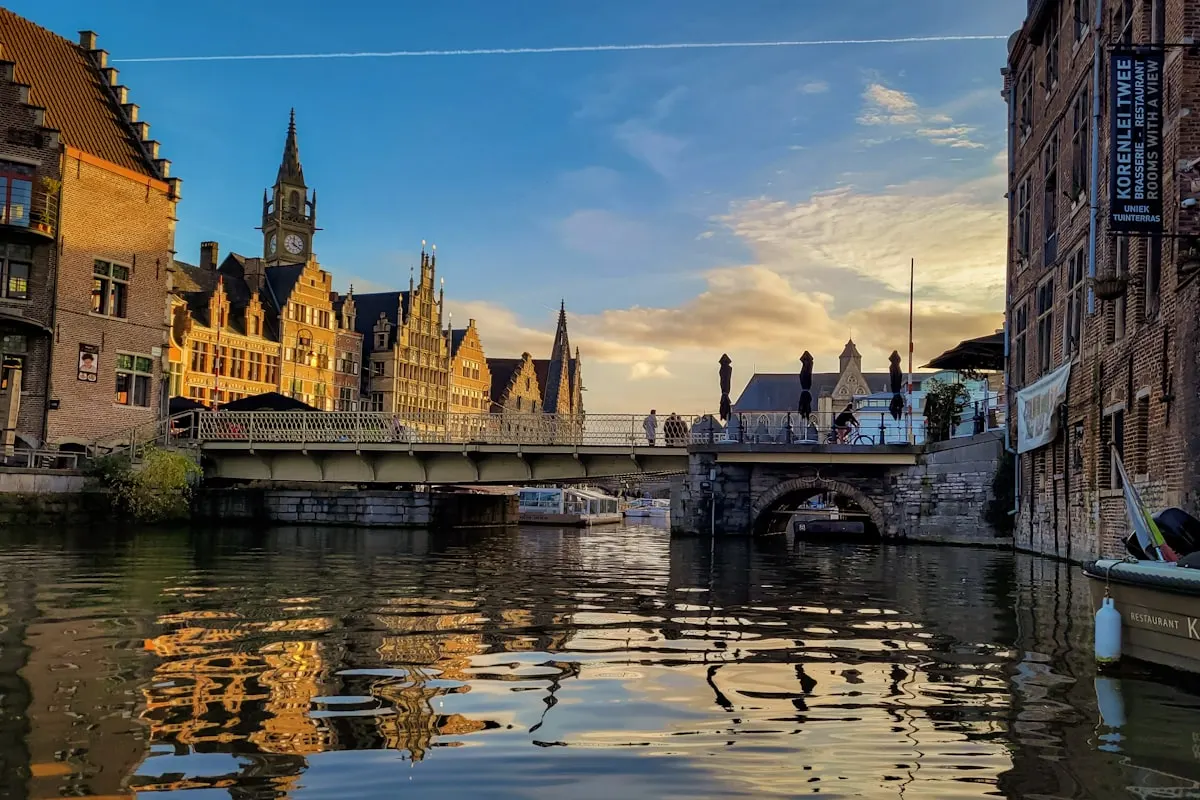
Ghent has the medieval looks of Bruges but the pulse of a real city. Gothic towers, canals and guild houses along the Graslei, yes, but also a big university, craft-beer bars, street art and an energy Bruges does not have. That is its secret: it is postcard-pretty without being a museum, and in the evening, when the day-trippers head back to Brussels, the floodlit quays belong to its residents. It is worth staying overnight, not just passing through.
The centre is compact and entirely walkable, but the areas have different characters. Here is how they really feel, with indicative prices and the places worth having nearby.
Where to stay in Ghent, area by area
The historic centre
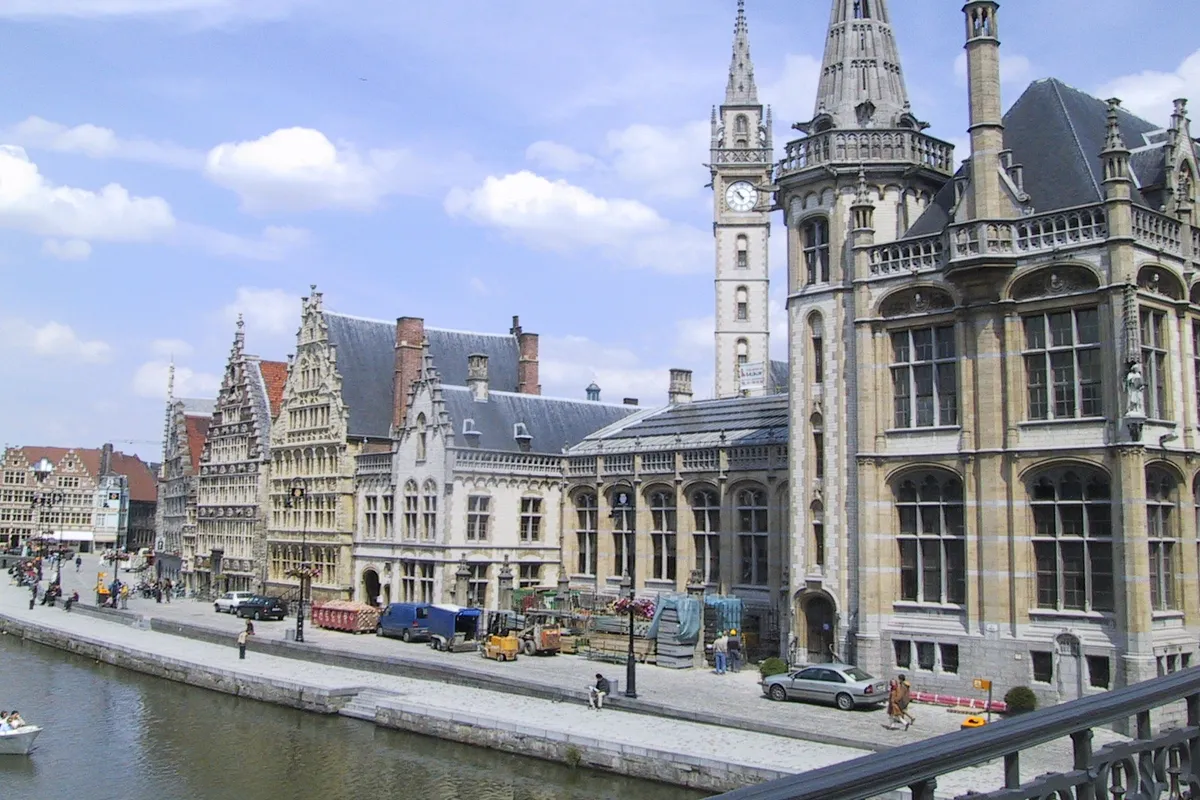
The heart is the line of towers between Saint Bavo's Cathedral, which holds the famous Van Eyck altarpiece, the belfry and Saint Nicholas' Church, out to the quays of the Graslei and Korenlei. Sleeping here means everything is on foot and you look out over the canals. It is the right call for a first-timer or a couple, with the highest prices and a little buzz in the evening.
- The guild houses on the Graslei waterfront
- The belfry and the square of the Korenmarkt
- The Van Eyck altarpiece in Saint Bavo's Cathedral
- The graffiti alley, Werregarenstraat
To stay right in the centre, look for a stay in the heart of Ghent.
The Patershol and the castle
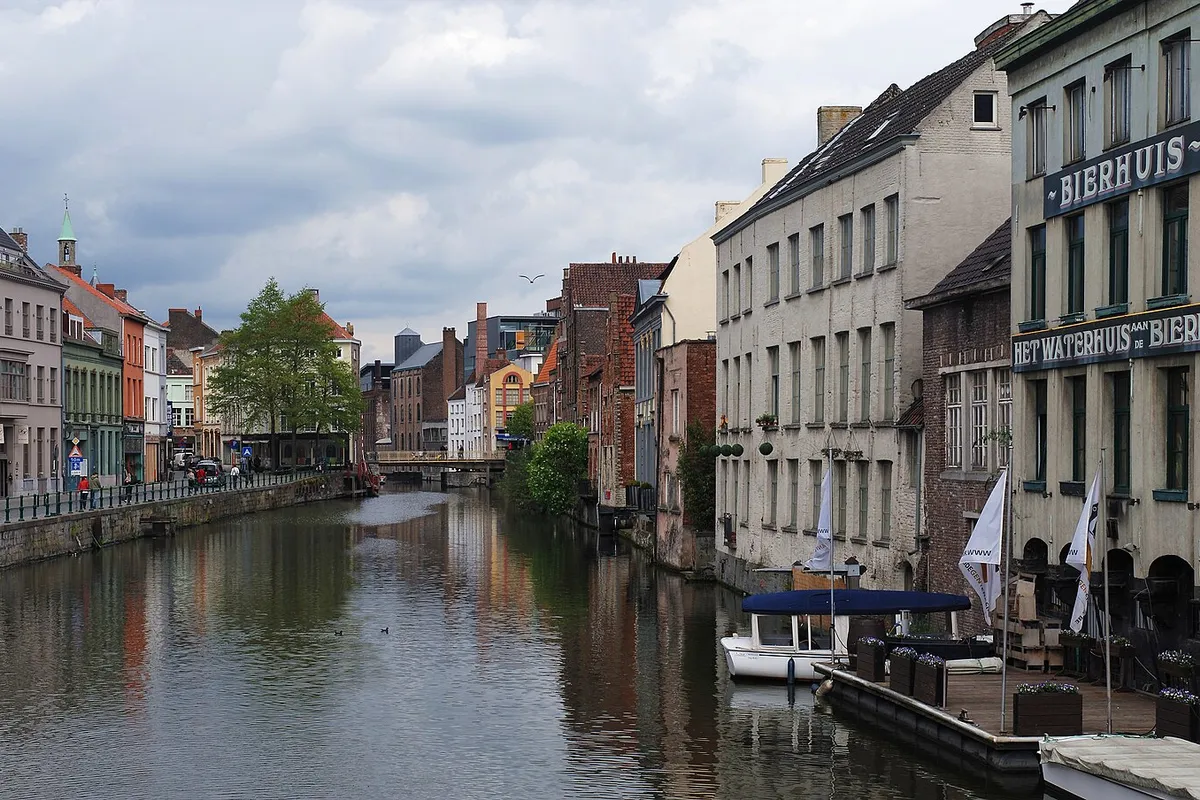
Behind the Castle of the Counts, the Patershol is the oldest, most characterful quarter: cobbled lanes, low houses and the city's highest concentration of good restaurants. Next to it rises the Gravensteen, the moated medieval castle. It is the area for atmosphere and good food, snug and steps from the centre.
- The Gravensteen castle and its ramparts
- The restaurants and beer bars of the Patershol
- The nearby Vrijdagmarkt, the market square
- Walks along the Leie at sunset
To sleep among lanes and restaurants, see stays in the Patershol.
Sint-Jacobs and Vrijdagmarkt
Around the squares of the Vrijdagmarkt and Sint-Jacobs beats the livelier Ghent, among cafes, beer bars, flea markets and student life. It is the right call for anyone after a night out who wants to stay central, with plenty of bars to try Belgian beers a step away.
- The bars for a Belgian beer around the Vrijdagmarkt
- The weekend flea market at Sint-Jacobs
- The venues and student nightlife
- The shopping streets towards the centre
To be near bars and evening life, look for stays towards the Vrijdagmarkt.
Sint-Pieters station and the south
Around the main station, Gent-Sint-Pieters, and in the southern district near Citadelpark, you find more modern hotels, often at better prices, and the art museums. It is the practical choice for arriving by train and for spending less: the centre is a quarter of an hour away by tram.
- Gent-Sint-Pieters station, the rail hub
- Citadelpark with the MSK and SMAK museums
- Direct, frequent trams to the centre
- Larger hotels and often lower prices
For train convenience and better prices, look for hotels near the station.
What it costs
Indicative figures: Belgium is not cheap, but Ghent costs less than Brussels.
- A double room in a mid-range 3-4 star: roughly 90-160 euros a night.
- A dinner for two of Flemish cooking with beer: about 60-90 euros; the local dish is waterzooi.
- Coffee: around 2.50 to 3 euros; a Belgian beer in a bar 3-5 euros.
- A single tram ticket (De Lijn): about 2.50 euros; the centre is walkable anyway.
- City tax: about 4.40 euros per person per night in hotels and B&Bs, with under-18s exempt. You pay it at your accommodation.
To get a real sense before you choose, compare current prices in Ghent.
Getting there and around
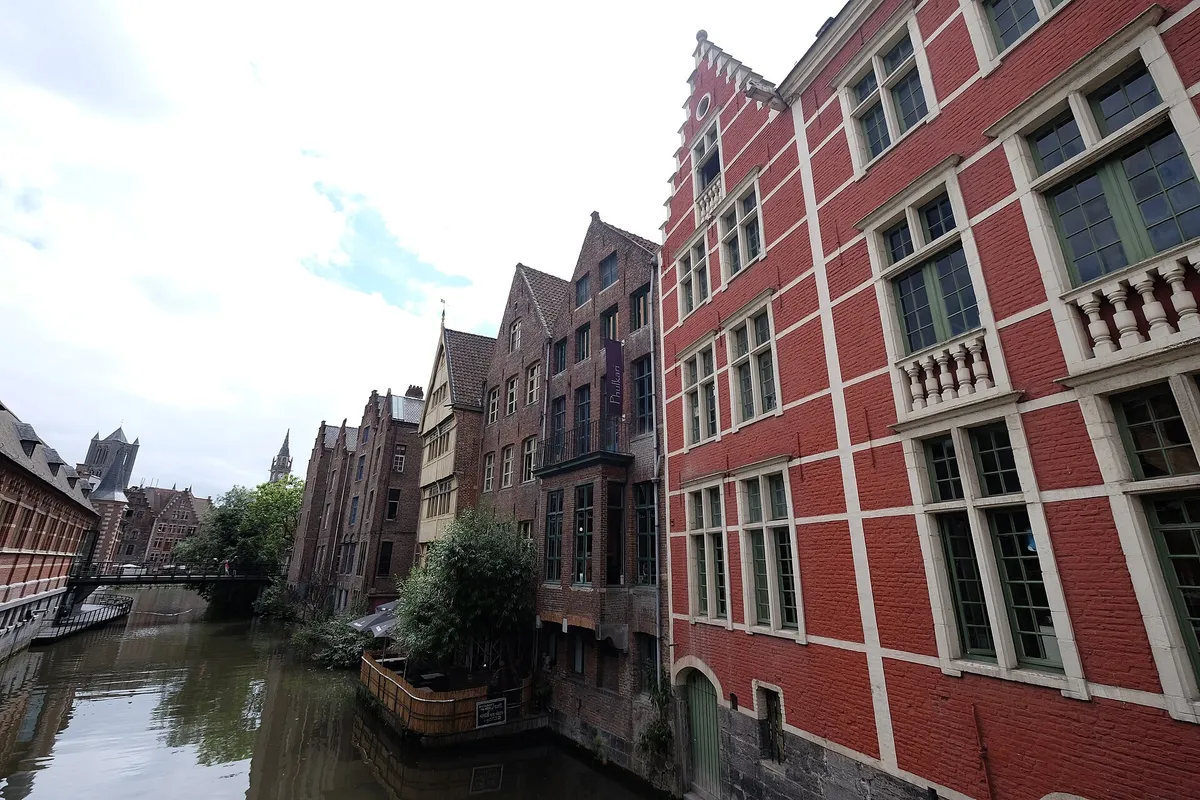
The main airport is Brussels (BRU), about 55 km away, with direct trains from the airport to Gent-Sint-Pieters in a little over an hour. The small low-cost hub of Brussels South Charleroi (CRL) is further. Ghent is a major rail node: it is about half an hour by train from Brussels, and links to Bruges, Antwerp and the other cities are frequent.
In town you do not need a car and it is discouraged: the centre is largely pedestrian and a low-emission zone (LEZ). You get around on foot and by tram, and it is a few minutes from the station to the centre. Ghent is also very bike-friendly.
When to go
- January-February: cold and damp, low prices, an intimate mood and quiet canals.
- March-May: pleasant spring, longer days and mild weather.
- June: excellent, before the tourist peak, long evenings on the quays.
- Mid-July: the Gentse Feesten, ten days of street festival across the whole city, a huge event with rooms scarce unless booked ahead.
- September-October: maybe the best window, fewer crowds and the city still lively.
- December: cold but cosy, with the Christmas market and, in some years, the Light Festival.
Good to know
Centre or station? The centre for atmosphere and canals; the Sint-Pieters area for better prices and train convenience, a quarter of an hour by tram.
Ghent or Bruges? Ghent is bigger, livelier and more local, with university energy and less of a museum feel; Bruges is smaller and more postcard-perfect. Many combine them, they are half an hour apart by train.
Do I need a car in Ghent? No, it gets in the way: pedestrian, low-emission centre. You get around on foot, by tram or by bike.
How much is the city tax? About 4.40 euros per person per night in hotels, free for under-18s.
How many days do I need? Two nights: one for the centre and the canals, the other for the castle, the Patershol and the museums, perhaps with a day trip to Bruges.
Before you book, compare live prices in Ghent on Edenfinder and pick the area that fits your trip.
Edenfinder
Paradise has a price. We find it lower.
We compare prices for the same hotels across every major booking platform, with direct links to the right page.
Search your hotel →From the same section
Destinations