Prices · August 2, 2026 · 8 min read
Tourist taxes in Europe: what you actually pay
How tourist taxes in Europe work in 2026: who collects them, the three common formats, who is exempt and how to budget for them before you book.
Tourist taxes in Europe are the line item that makes any quote look like a lie: you book a room at 90 euros a night, you arrive, and the front desk asks for another 12 euros nobody mentioned. It is not a scam and almost never the hotel's doing. It is a local tax that in most of Europe is collected on site, which is exactly why it sits outside the total you saw online. Understanding the mechanism is worth more than any list of amounts, because those amounts change with a council vote and lists go stale fast.
Who collects the tourist tax, and why it exists
The hotel keeps none of it. The tax is set by the municipality, in some countries by the region too, and the property acts as collector: it takes the money, passes it to the authority and gives you a receipt. That is why the receptionist cannot waive it even if they like you.
People who sleep in a city use services the local community pays for: waste collection, transport, the upkeep of the monuments everyone came to see. Increasingly the revenue also funds crowd management in overloaded historic centres, a theme we cover in the guide to overtourism.
Two practical consequences follow. There is no single European rule, just thousands of separate local regulations. And the amount changes from year to year, often in January. So what follows is the mechanism, not a table of numbers: the only reliable figure is the one published by the town where you will actually sleep, whether you are planning an autumn 2026 weekend or Christmas.
The three most common forms of tourist taxes in Europe
A flat amount per person per night
The most widespread format, especially in Italy, France and most German and Austrian resort towns. The amount tracks the property category: a five star pays more than a hostel, a campsite least of all. Two things to know:
- it multiplies by heads, so a family of four pays four times what a solo traveller pays;
- there is very often a cap on consecutive nights, after which you stop paying.
It is also the most predictable: people times nights times the category rate.
A percentage of the room rate
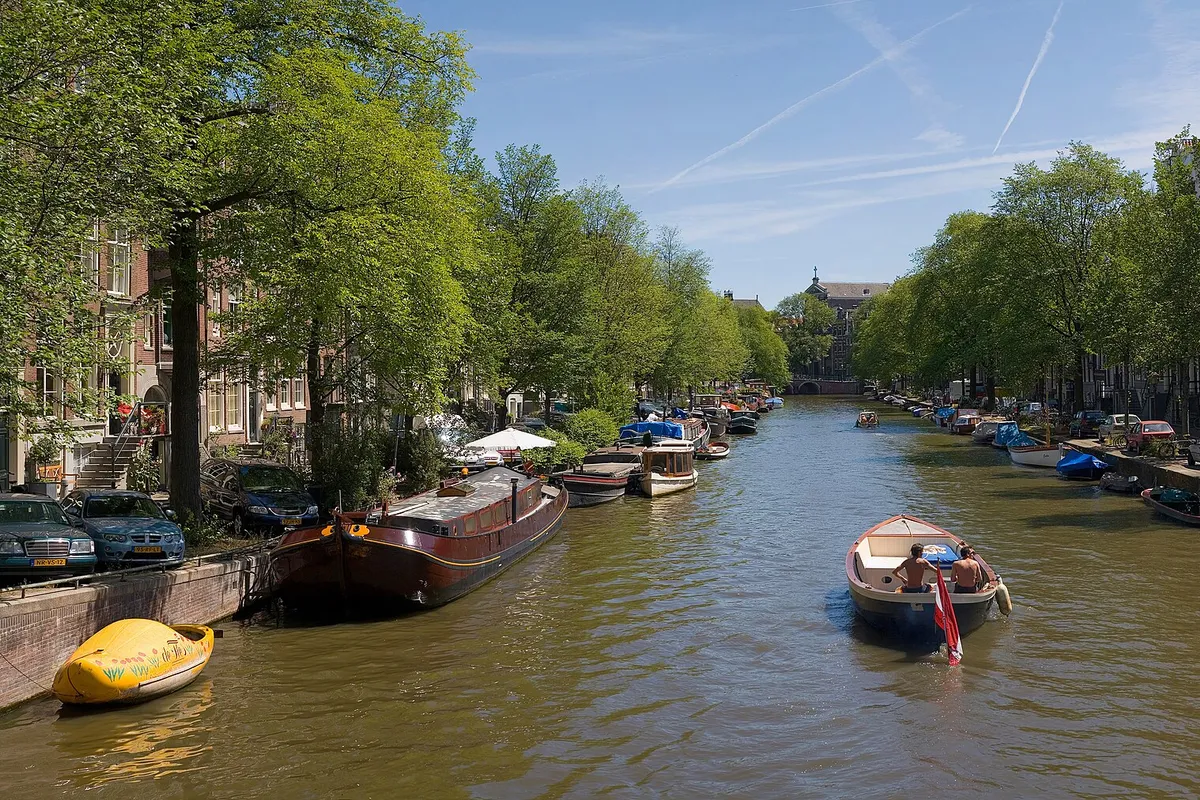
Here the tax is pegged to the price: the pricier the room, the bigger the bill. Amsterdam is the best known case and sits among the highest rates in Europe; percentage formulas also turn up in several German and Austrian cities. Ask the property two things: is the percentage applied with or without VAT, and does the base include breakfast? Over a week the answer matters.
An access fee for day visitors
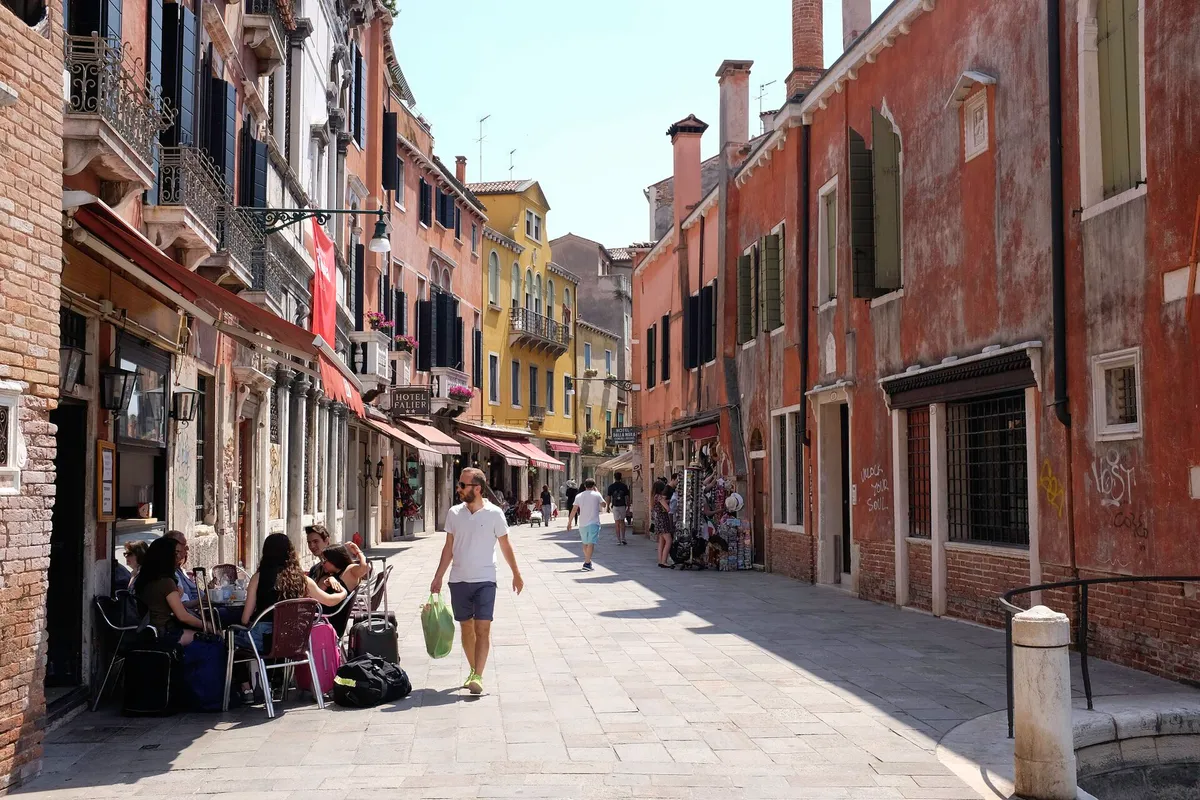
The newest family, and it targets people who do not stay the night: you walk in, spend the day, leave. Venice is the first big European case, with a fee due only on a published list of dates and bookable online. You are not paying for a night, you are paying to enter on a peak day. As a rule, people who sleep in the city and pay the bed tax do not also pay the access fee, but they still register to get the exemption.
Who is usually exempt
Exemptions vary more than anything else from town to town, so treat this as a list of categories to check, not a rule that holds everywhere:
- children below a certain age: six, ten, twelve or eighteen depending on where you are;
- residents of the municipality;
- people with a disability and their companion;
- guests staying for medical treatment, and those accompanying a patient;
- in some regulations coach drivers, tour leaders, school groups and emergency workers.
Business travel, contrary to a stubborn myth, is rarely exempt as such. And do not forget the night cap: in many Italian cities the tax only applies to the first few consecutive nights, which changes the arithmetic of a long stay.
How it works in the most searched destinations
Venice
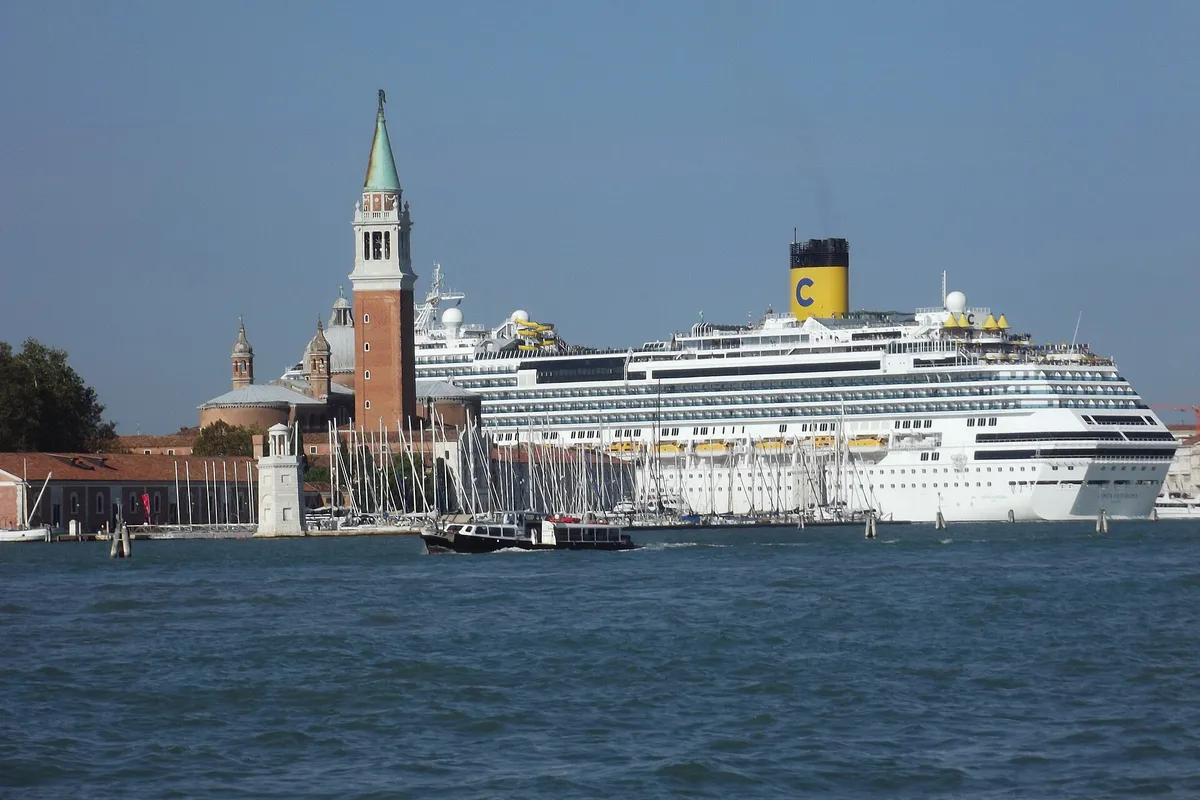
Venice runs two separate charges that get confused constantly. Overnight guests pay the bed tax, per person per night, with different amounts by category, by zone (historic centre, islands, mainland) and by time of year, plus a cap on consecutive nights. Day trippers arriving on the dates set by the city book and pay the access fee instead, then show a code at checkpoints. Amounts and the calendar change every year: check the City of Venice website and the official access fee portal. For rooms, see the Venice hotel guide and a hotel search in Venice.
Amsterdam
Amsterdam charges a percentage of the accommodation price and is widely considered among the most expensive in Europe for exactly that reason: on a budget room it barely registers, on a room costing several hundred euros it is worth as much as dinner. There is also a separate charge for cruise passengers coming ashore. The rate in force is published on the City of Amsterdam website.
Barcelona and Catalonia
In Catalonia the taxes stack: a regional levy that varies by type of accommodation, plus a surcharge decided by the city. You end up with two lines on the same room, which travellers often mistake for a billing error. The official reference is the Ajuntament de Barcelona; for neighbourhoods, see the Barcelona hotel guide.
Paris and French cities
France uses the taxe de séjour: an amount per night per adult, graded by property category from hostels up to the palace class, with departmental and regional surcharges on top. The system has one great virtue, transparency: the rate for every commune is published on an official tax portal. Under eighteens are generally exempt, which makes France cheaper than it looks for families.
Rome and Italian cities
The Italian standard is a flat amount per person per night, banded by stars or property type, with a cap on consecutive nights. Rome is among the cities with the highest amounts for upper categories, but the principle is identical in Florence or in a village: the town sets the number and publishes it. On a multi-city trip the tax adds up city by city, and every change of property restarts the night count. For rooms, see the Rome hotel guide.
Greece
Greece replaced its old accommodation tax with a climate resilience levy, created to fund the response to floods and fires. Two details change the maths: it applies per room rather than per person, which favours families, and it varies between high and low season. The Greek tax authority administers it; for the capital there is the Athens hotel guide.
Germany and Austria
Two different things coexist here. The Kurtaxe is the resort and spa tax, flat per person per night, and it almost always comes with a guest card including local transport: it can be worth more than it costs, but only if you use it. In the big cities the term is City Tax or Beherbergungssteuer, often a percentage of the net room rate. Vienna applies a percentage, in Germany it varies city by city. Check the City of Vienna site, and for rooms the Vienna hotel guide.
What it actually costs: three sums in three minutes
As an order of magnitude, a flat European bed tax often sits between one and seven euros per person per night, while percentage formulas run from low single digits to double digits of the room rate. Those are indicative ranges, not promises: the number that counts is the one the town publishes.
The two formulas to remember are simple:
- flat tax: paying guests, times nights (up to the cap), times the category rate;
- percentage tax: room rate, times the rate, times nights.
Three worked examples, with numbers chosen only to show the mechanism:
- A couple's weekend, two nights, three euros per person per night: 12 euros total. On a 120 euro room that is five per cent of the bill, noise.
- A family of four for seven nights at four euros per person per night, with the two children exempt: 56 euros. Without the exemption, 112 euros, which is a dinner out.
- A 200 euro room with a hypothetical ten per cent rate: 20 euros a night, 140 euros over a week.
The last case explains why the format matters more than the amount: the same holiday moved from a flat tax city to a percentage city can shift by a hundred euros without the room rate changing at all.
Why long stays reshuffle the destination ranking
Over two nights the tax is background noise. Over ten nights for four people it becomes a line to put next to the flights, and it moves the comparison between destinations in ways that are not obvious:
- flat per person taxes punish families and groups, and are almost painless for solo travellers;
- per room taxes, like the Greek levy, reward anyone travelling four to a room;
- percentage taxes punish expensive rooms and are barely visible in a three star;
- night caps reward staying put and punish changing city every couple of days.
If you are weighing two destinations for a week, work the tax out first. Together with dynamic room pricing, explained in the guide to dynamic hotel pricing, it is the line that most often overturns a ranking built on nightly rate alone.
Your pre-booking checklist
- Search the tourist tax plus the town name on the official municipal site, not on a forum.
- Check the property's band, and whether a cap on consecutive nights exists.
- Check the exemption age for children: it is not the same everywhere.
- Visiting for the day where an access fee applies? Check whether your date is on the calendar.
- Add the tax to the room total, and only then compare destinations.
On Edenfinder you compare real, bookable prices as they stand right now: we are a comparison tool and a technical intermediary, and the booking is handled with Nuitee as merchant of record. When the tax is paid on site it stays outside every online total, ours included, and we would rather write that down than pretend it does not exist. To see how it lands for your trip, start a hotel search.
What to ask at the front desk
- What is the exact amount per person per night for this category?
- Do children pay, and from what age?
- After how many nights does it stop?
- Cash or card, and can I have a separate receipt?
- Is it already included in what I paid online?
Good to know
Is the tourist tax included in the price I see online? Almost never. In most of Europe it is paid at the property, so no site can fold it into the total. Some prepaid rates include it, and then it is stated in the rate conditions.
Does it apply to apartments, B&Bs and hostels? As a rule yes, with different amounts by property type. In short lets the collection may run through the platform or the host.
Is it refunded if I cancel? If it is paid on site you never paid it, so there is nothing to refund. If it was inside a prepaid rate it follows that rate's conditions, covered in the guide to free cancellation.
How is it different from a resort fee? A resort fee is a surcharge set by the hotel and kept by the hotel; a tourist tax is a public levy passed to the town. We compare them in the guide to resort fees and tourist taxes.
Budgeting for it takes five minutes and removes the one guaranteed surprise of any European trip. Check the amount on the municipal site, add it to the room rate, then compare available rooms knowing what you will really pay.
Edenfinder
Paradise has a price. We find it lower.
We compare prices for the same hotels across every major booking platform, with direct links to the right page.
Search your hotel →Frequently asked questions
Is the tourist tax included in the price I see online?
Almost never. In most of Europe it is paid at the property, so no site can fold it into the total. Some prepaid rates include it, and then it is stated in the rate conditions.
Does it apply to apartments, B&Bs and hostels?
As a rule yes, with different amounts by property type. In short lets the collection may run through the platform or the host.
Is it refunded if I cancel?
If it is paid on site you never paid it, so there is nothing to refund. If it was inside a prepaid rate it follows that rate's conditions, covered in the [guide to free cancellation](/en/blog/cancellazione-gratuita-come-funziona).
How is it different from a resort fee?
A resort fee is a surcharge set by the hotel and kept by the hotel; a tourist tax is a public levy passed to the town. We compare them in the [guide to resort fees and tourist taxes](/en/blog/resort-fee-tasse-soggiorno).
From the same section