Prices · August 28, 2026 · 8 min read
New Year's Eve hotels: minimum stays, gala dinners, deposits
On 31 December a room stops being a room and becomes a package. The three conditions that appear only on those dates, and when the price stops falling.

Book a Tuesday in March and you are buying a room. Book 31 December and you are buying something else that is displayed as a room, priced like a room, and governed by conditions no other night of the year has.
None of this is hidden, exactly. It is written in the rate description, three clicks down, in a paragraph nobody reads until the confirmation arrives.
Three conditions that appear only on those dates
A minimum stay. Two nights is common in cities, three or four in ski and coastal resorts. The consequence is arithmetic: the attractive nightly rate you found is multiplied by a number you did not choose. A room at 180 a night with a three night minimum is a 540 decision, and it should be compared against other 540 decisions, not against other 180 rates.
A compulsory dinner. In much of southern Europe the gala dinner on the 31st is not an option you decline. It is added per person, often between 80 and 250, sometimes with drinks and sometimes emphatically without. It may appear as part of the rate, as a mandatory extra at the property, or in a line that says supplement. Two adults on three nights can add more in dinner than in the third night of the room.
Full prepayment, non refundable from the moment you book. This is the one that surprises people most, because it breaks the usual pattern. Ordinary non refundable rates are a discount you choose. New Year rates are frequently non refundable regardless of price, and frequently charged in full immediately rather than at a deadline. The mechanics of that trade are in non refundable rates; what changes here is that you often do not get the choice.
Read the stay, not the night
The single most useful habit for these dates is to stop comparing nightly rates and start comparing the total you will have paid when you walk out on 2 January.
That total is: nights times the minimum stay, plus the dinner times the number of people, plus the city tax, which is charged per person per night and is almost never inside the rate you compared. The tourist tax across Europe varies enough between cities to matter on a four night stay for two.
Done properly, this comparison reorders your shortlist. A hotel that looks 30 percent more expensive per night can end up cheaper for the stay because it asks for two nights instead of four and leaves dinner optional.

When the price stops falling
For most dates, waiting is a reasonable strategy: supply is elastic, demand is uncertain, and a hotel with empty rooms in February will discount them. That logic, which is the ordinary behaviour of dynamic pricing, is exactly what does not apply on 31 December.
The demand for that night is known a year in advance and the supply is fixed. Under those conditions a revenue manager has no reason to cut, and every reason to hold. What tends to happen instead is the opposite of the usual pattern: the cheapest rooms sell first, the remaining inventory is the expensive part of the building, and the average price you see rises as the date approaches.
The practical rule that follows: for New Year, early beats clever. If you are looking in late November, the Black Friday week is one of the few moments when a genuine discount on those dates appears at all, because it is the one week hotels use to fill the last soft spots before the holidays close in.
What to ask before you pay, in writing
Five questions, by email, so the answer exists on paper:
- Is the minimum stay two nights or more, and which nights exactly?
- Is the dinner on the 31st compulsory, and what does it cost per adult and per child?
- Are drinks included in that price, and is there a fixed sitting time?
- Is the booking refundable at any point, and if not, when is the card charged?
- Is the city tax included in the total shown, or collected at the property?
On that last point, remember that what the desk blocks on arrival is a separate number again, and on a prepaid holiday booking it can be larger than usual because the hotel expects extras. That is covered in the hold on your card at check-in.
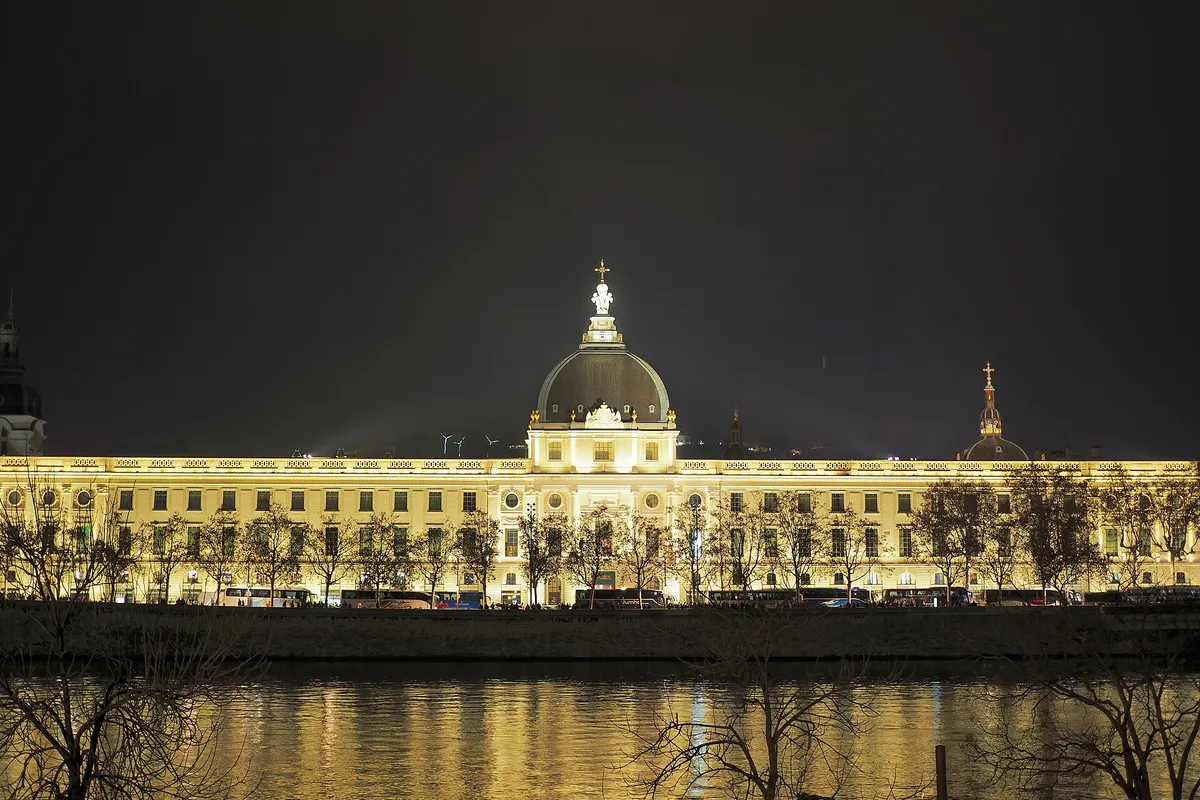
The area matters more on this night than on any other
For one night a year, the usual advice about choosing a neighbourhood gets turned around. Being in the middle of the celebration is either exactly what you want or the reason you will not sleep, and the two are decided by the same booking.
Check three things specific to the date: where the fireworks or the main square event actually is, whether public transport runs late or free that night, which many cities arrange but not all, and whether your street is inside a closed zone, because a taxi that cannot reach the door at one in the morning is a long walk with luggage. The general method is in how to choose the right neighbourhood.
Cities that handle the night well and reward booking early: Vienna, Prague, Budapest and Edinburgh, the last of which effectively sells out months ahead.
If you would rather skip the whole thing
There is a legitimate alternative strategy: leave the 31st out of it. The first ten days of December are among the quietest and cheapest of the winter, and the Christmas markets are open from late November in most of central Europe. If what you actually want is warmth rather than a countdown, the numbers for December are in where it is actually warm in December.
Whichever way you go, book the flight and the room on the same logic and not in the same hour: the timing that works for air tickets is a different curve, and it is in when to buy a flight. Then compare the same hotels across platforms for your dates: hotels in Vienna, hotels in Prague, or open destinations.
Edenfinder
Paradise has a price. We find it lower.
We compare prices for the same hotels across every major booking platform, with direct links to the right page.
Search your hotel →Frequently asked questions
Why is there a minimum stay at New Year?
Because demand for that night is known a year ahead and supply is fixed: the hotel has no reason to sell one night when it can sell two or three. Two nights are common in cities, three or four in ski and coastal resorts. The practical consequence is that the nightly rate that attracted you has to be multiplied before you compare it with anything else.
Is the gala dinner on the 31st compulsory?
In much of southern Europe yes, and it is added per person: often between 80 and 250 euro, sometimes with drinks and sometimes without. It can appear inside the rate, as a mandatory extra at the property, or as a supplement. Ask by email before paying, along with the sitting time and what is included: two adults over three nights can spend more on dinner than on the third night of the room.
Is it worth waiting for a last minute deal?
No, and this is the exception to the rule that holds the rest of the year. On ordinary dates a hotel with unsold rooms discounts them; on 31 December it does not, because it already knows they will fill. What happens is the opposite: the cheap rooms sell first, the expensive part of the building is what remains, and the average price you see rises as the date approaches.
From the same section