Destinations · August 2, 2026 · 8 min read
Best Christmas markets in Europe: 2026 guide
Best Christmas markets in Europe in 2026: when they really open (Advent starts 29 November), 10 cities compared, where to stay and what a weekend costs.
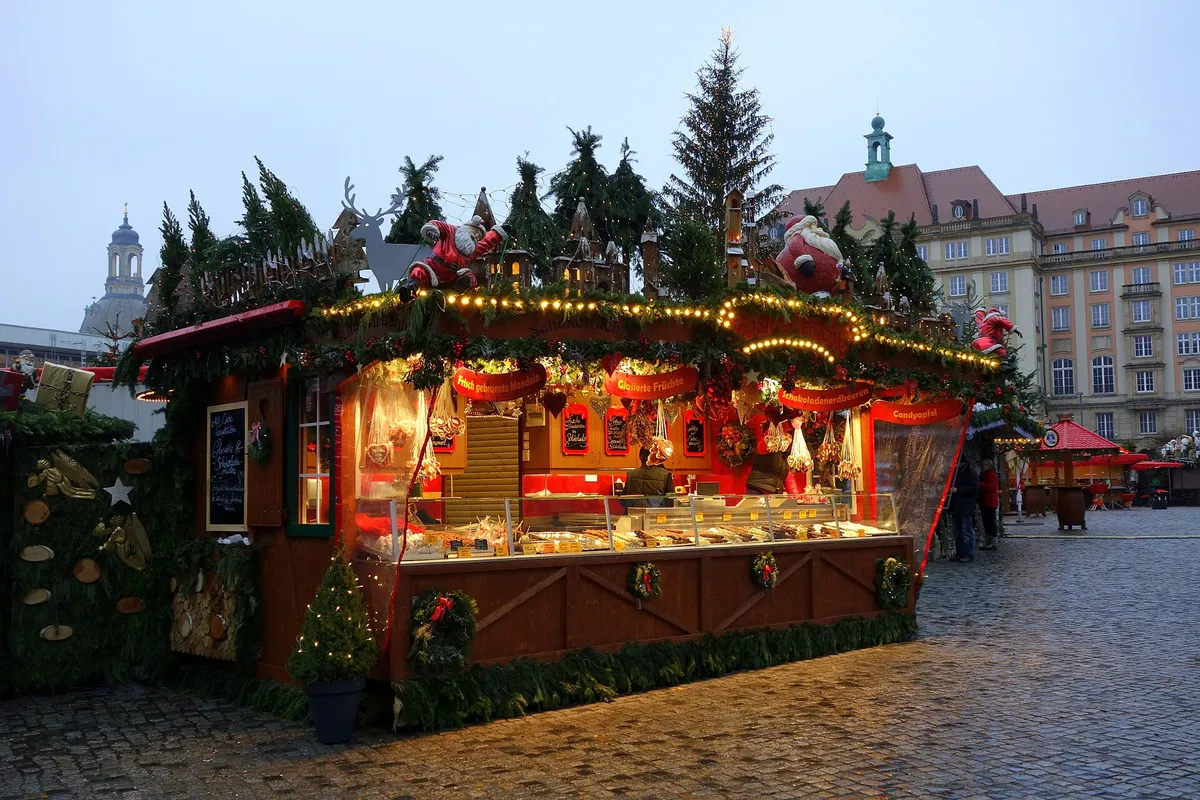
The best Christmas markets in Europe do not all open on the same day, and that is worth sorting out before you book a hotel for December. The dates follow Advent rather than the retail calendar, which in 2026 shifts everything by a few days compared with last year. Below: the rule that lets you work out the opening dates yourself, ten cities and what actually sets each apart, and the practical part, what a night costs, how the city tax works and when to book.
When do the Christmas markets in Europe open in 2026?
The Advent rule, not an invented date
Christmas Day 2026 falls on a Friday. The first Sunday of Advent is the fourth Sunday before Christmas, which makes it 29 November 2026. Markets tied to the Advent tradition, with Nuremberg's Christkindlesmarkt at the head of the list, customarily open on the Friday before that Sunday: 27 November 2026.
That is a rule, not an announcement: each city publishes its own dates between September and October and sometimes shifts them by a day. Before you book, check the city's official tourism site.
The three calendar families
- Early openers. Plenty of large German and Austrian cities start in mid November, because the season is commercial before it is liturgical. Vienna, Cologne and Munich usually belong here, and the last week of November gets the full setup with far fewer crowds.
- Closing on 23 or 24 December. The norm in Germany and Austria, and on the 24th many stalls pack up by midday. Visitors who arrive on 27 December expecting markets find lights, shops and not much else.
- Running past Christmas. The exception: Prague, Budapest and Zagreb typically stay open after 25 December, often into the first days of January or through Epiphany. If the week between Christmas and New Year is your only window, look there.
Where to check the exact dates
Only one kind of source is reliable: the official tourism site of the city or of the market itself. These are the official ones for the ten cities covered here.
The best Christmas markets in Europe, city by city
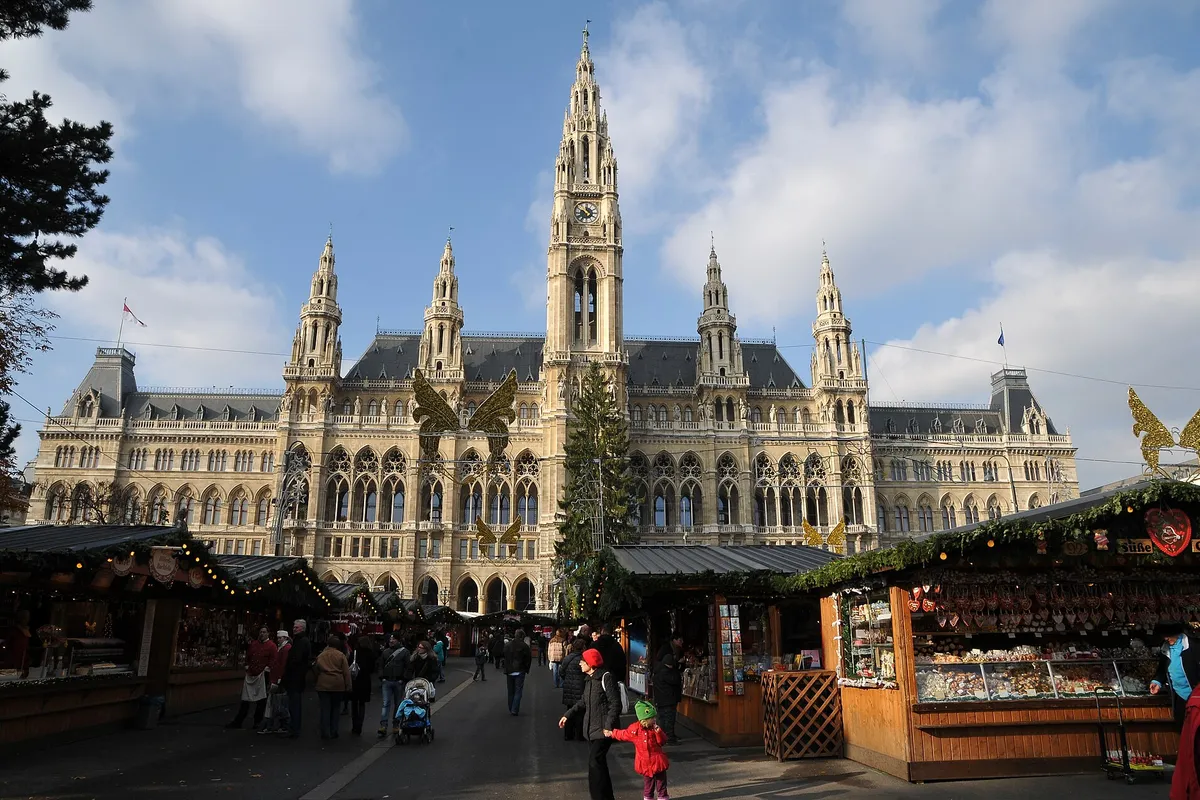
Vienna, the most spectacular
The Christkindlmarkt in front of the City Hall is the postcard one, but locals head for Spittelberg, a grid of traffic free Biedermeier lanes, and Karlsplatz, which leans craft and organic; Schönbrunn usually carries on into New Year. Stay between the Ring and the seventh district and three markets are walkable. Read where to stay in Vienna.
Nuremberg, the most traditional
The historical benchmark for all the others, documented from the seventeenth century: red and white cloth stalls, strict rules on what can be sold, Lebkuchen and Rostbratwurst. It follows Advent, so in 2026 it should run from 27 November to 24 December. The old town is compact and shuffles along on weekends, so sleeping inside the walls is worth the premium. Search hotels in Nuremberg.
Strasbourg, the oldest
The Christkindelsmärik dates back to 1570 and the city calls itself the capital of Christmas, with around ten markets between the cathedral and Petite France; on weekends the centre sits inside a security perimeter. It is the most expensive city here for its size, simply because there are few rooms: the workaround is Kehl, over the bridge in Germany, on the tram line. Search hotels in Strasbourg.
Prague, the best looking for the money
Old Town Square with the tree in front of the Týn church, and Wenceslas Square as the second hub, with mulled wine, trdelník and roast ham carved at the stall. Prices are still sane, and it is one of the few that usually stays open through Epiphany. The centre is saturated, so look at Vinohrady or Karlín. See where to stay in Prague.
Budapest, the best for eating
Vörösmarty tér and the market in front of St Stephen's Basilica, with the light projection on the facade and the skating rink. Not generic street food but proper dishes cooked on site. It closes later than most, often after New Year, and the thermal baths are twenty minutes away. Best base: the fifth district. See where to stay in Budapest.
Cologne, the easiest to reach
Half a dozen linked markets, and the famous one sits at the foot of the cathedral, two minutes from the main station: step off the train and you are in it. Heumarkt has the ice rink, the harbour market is the maritime themed one. It typically closes on 23 December. Search hotels in Cologne.
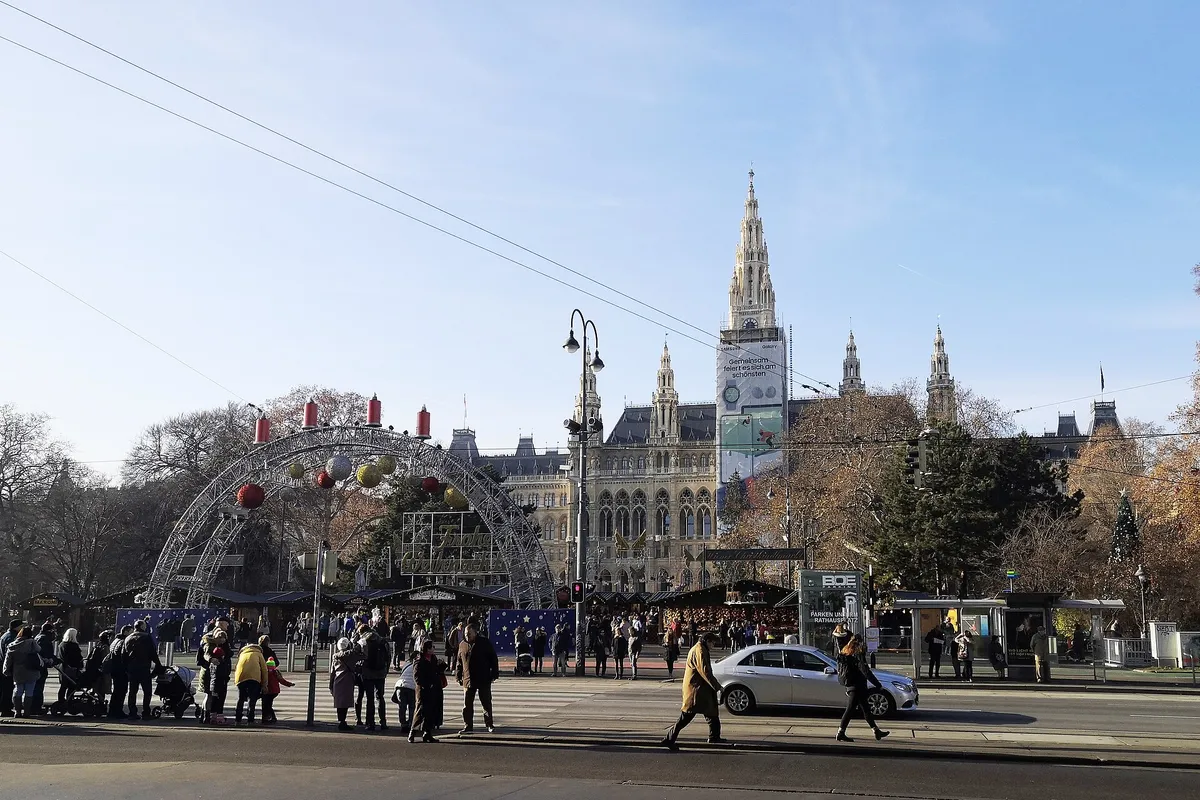
Munich, the most varied
Marienplatz is the classic version, but a few stops away sit the medieval market and the alternative Tollwood at the Theresienwiese, plus the neighbourhood markets. Munich is expensive year round and December stings: look at Schwabing or Sendling. Read where to stay in Munich.
Krakow, the best value
The market fills the Rynek Główny, one of the largest medieval squares in Europe: grilled oscypek cheese with cranberry jam, obwarzanki, hot soups. It is the cheapest of the famous names by a clear margin and usually runs into early January. See where to stay in Krakow.
Tallinn, the most intimate
One square, the Town Hall square, with the tree at its centre: the city claims, along with Riga, one of the first public Christmas trees in Europe. It is small, and that is the point, because the medieval town around it does the rest. Budget for genuine cold and very short days. Search hotels in Tallinn.
Zagreb, the liveliest
Advent u Zagrebu is not a market in a square but a whole city rearranged: open air concerts, the illuminated Zrinjevac park, fritule and street food. It won a well known online award as Europe's best Christmas market three years running. Prices stay moderate and the season usually reaches into January. Search hotels in Zagreb.
What a Christmas market weekend costs
Indicative ranges for a standard mid range double room, for the Saturday night of an Advent weekend, room only. They are not promises and not quotes: hotel prices move daily, and the only number that matters is the live one you see when you search.
- Krakow: 60-130 euros
- Zagreb: 70-140 euros
- Tallinn: 70-150 euros
- Budapest: 80-160 euros
- Prague: 90-180 euros
- Nuremberg: 110-220 euros
- Cologne: 110-230 euros
- Vienna: 120-250 euros
- Munich: 130-260 euros
- Strasbourg: 150-300 euros
The same room midweek often costs far less, not rarely a third less: Tuesday and Wednesday in December are the forgotten nights of the season. Beyond the room, budget 15 to 25 euros per person per day at the stalls, more in Strasbourg, Vienna and Munich.
When to book a hotel for the Christmas markets
The book late rule that works for big cities in low season does not apply here: the dates are fixed, the supply of rooms is what it is, and demand piles onto four weekends.
- August and September: official dates are not out yet, but hotel calendars are open and rates sit at their seasonal floor. Best moment to lock something in, if you can live with slight uncertainty about the opening day.
- October: the dates come out, search demand spikes and prices start climbing.
- November: in the mid range categories the good weekends are already picked over, leaving awkward locations or expensive ones.
- The final fortnight: what is left is unsold inventory, which in small cities like Strasbourg and Nuremberg means very high prices or nothing at all.
The way to handle the uncertainty is to book a free cancellation rate now and keep comparing: if the price falls, rebook and cancel the first. The reasoning is in when to book a hotel.
Why prices double on Advent weekends
Hotels use dynamic pricing: the software raises rates as occupancy climbs, and in these cities December occupancy climbs earlier and faster than at any other point of the year, New Year included. The effect is called compression, and it is why the same room can cost twice as much two days apart.
In 2026 the Advent weekends are 28 and 29 November, 5 and 6 December, 12 and 13 December, 19 and 20 December, and the middle two are normally the most contested. One extra warning: 8 December 2026 falls on a Tuesday and is a public holiday in Austria, Italy and Spain, which turns the weekend of the 5th and 6th into a long bridge felt sharply in Vienna and Munich. If you can shift by a week, shift. The mechanics are explained in dynamic hotel pricing.
How the city tax works in Germany and Austria
Germany has no national tourist tax: each municipality decides. Where it exists it is often a percentage of the net room price, usually in a band around 3 to 5 per cent, and some cities do not charge it at all. Austria works similarly. In the Czech Republic, Hungary, Poland, Estonia and Croatia the more common model is a flat amount per person per night, normally a couple of euros.
The practical point is the same everywhere: it is nearly always paid at the property, not in the rate you see online, so add it to the budget. Amounts change, so the only valid figure is the one on the municipality's own site. On the extra lines of a booking, see tourist taxes and resort fees.
Sleeping one stop outside the centre
This is the single change that moves the final bill the most, and in December it is nearly painless, because market cities run public transport late. Concretely: in Vienna beyond the Gürtel, in Munich towards Schwabing or Sendling, in Prague in Karlín or Vinohrady, in Cologne across the Rhine in Deutz, in Nuremberg along the S-Bahn, in Strasbourg over the border in Kehl.
A rule of thumb: fifteen minutes maximum on public transport, on a direct line with no changes. Past that the saving stops repaying the three or four daily trips with frozen hands.
Free cancellation when the forecast is uncertain
A rainy weekend at two degrees turns a Christmas market into a wet queue in front of a mulled wine stall. Add fog, cancelled flights and strikes, which in December are not a theoretical risk. Non refundable rates cost less, but on a single date that cannot move, flexibility is worth that margin.
There is a second advantage: free cancellation lets you rebook if the price drops, which happens when a hotel realises two weeks out it still has empty rooms. How the cancellation windows work is covered in free cancellation explained.
Good to know
When do the Christmas markets open in Europe in 2026? Advent markets open on the Friday before the first Sunday of Advent, which is 27 November 2026. Many large cities start in mid November instead; exact dates come out in autumn.
Are the markets open on Christmas Day? Almost never: Germany and Austria close on 23 or 24 December. The main exceptions are Prague, Budapest and Zagreb, which usually continue past the 25th.
Which is the cheapest Christmas market city? Among the famous names, Krakow stays the most affordable across the board: hotels, food and transport. Zagreb and Budapest follow.
How many days do I need? Two nights for one city. Three lets you pair neighbours: Vienna and Bratislava, Nuremberg and Munich, Prague and Dresden.
Edenfinder is a comparison tool: it puts live prices for the same hotel from several providers side by side, while the booking itself is handled with Nuitee as merchant of record. We do not promise the lowest price on the market, we show what is there right now. If you have a city in mind, check what is still free on the Advent weekends while the window is good.
Edenfinder
Paradise has a price. We find it lower.
We compare prices for the same hotels across every major booking platform, with direct links to the right page.
Search your hotel →Frequently asked questions
When do the Christmas markets open in Europe in 2026?
Advent markets open on the Friday before the first Sunday of Advent, which is 27 November 2026. Many large cities start in mid November instead; exact dates come out in autumn.
Are the markets open on Christmas Day?
Almost never: Germany and Austria close on 23 or 24 December. The main exceptions are Prague, Budapest and Zagreb, which usually continue past the 25th.
Which is the cheapest Christmas market city?
Among the famous names, Krakow stays the most affordable across the board: hotels, food and transport. Zagreb and Budapest follow.
How many days do I need?
Two nights for one city. Three lets you pair neighbours: Vienna and Bratislava, Nuremberg and Munich, Prague and Dresden.
From the same section