Destinations · August 2, 2026 · 8 min read
Where to stay in Valencia: a real guide to the areas
Where to stay in Valencia: Ciutat Vella, Russafa, El Cabanyal and the City of Arts compared, with indicative price bands, real distances and when to go.
Where to stay in Valencia comes down to one thing: understanding the shape of the city. Valencia is not a circle with a centre and suburbs around it. It is a narrow strip between two lines. The first is the old bed of the river Turia, dry since 1957 and now a park roughly nine kilometres long, a green arc wrapped around the old town. The second is the sea, four or five kilometres further east and invisible from the centre. Almost every neighbourhood worth considering leans on one of those two lines, and choosing well means deciding which one you want to wake up next to.
This is not a list of hotels. It is a map of the districts, with real distances, stated drawbacks and indicative price bands. If you want the general method first, how to choose the right neighbourhood covers the principles.
Why the Turia gardens explain the whole city
In 1957 the Turia flooded Valencia. The response was drastic: divert the river south along an artificial channel and leave the old bed dry. For years there was a serious plan to run an urban motorway through it. The park won instead, and it was probably the luckiest planning decision Spain made in the twentieth century.
That riverbed is now a continuous garden of about nine kilometres, from the Cabecera park and the Bioparc in the west to the Ciutat de les Arts i les Ciències in the east, with sports pitches, the Palau de la Música and the Gulliver playground along the way. The historic bridges pass overhead; down inside there is not a single traffic light. Hence the practical rule when you book: check how many minutes on foot separate your hotel from the nearest entrance to the Turia. Under ten, and you are connected to most of the city without touching public transport, because the park works as a pedestrian and cycling bypass.
Where to stay in Valencia, area by area
Ciutat Vella: La Seu and La Xerea, the quiet centre
La Seu is the core around the cathedral, the Micalet bell tower and the Plaza de la Virgen; La Xerea is the discreet band towards the Serranos gate, all residential streets and grand doorways. This is the first-visit area and the couples area: you step out of the hotel already inside the old city. It is not the area for nightlife downstairs, nor for a firm budget, because rates here are the highest in town. Central Market ten minutes on foot, Russafa twenty, the beach twenty-five by tram. Look at places to stay in Valencia.
Ciutat Vella: El Carme, the palaces and the noise
El Carme is the most photographed and the loudest slice of the old town: medieval lanes, enormous murals, neglected noble palaces and the Quart towers still pockmarked by Napoleonic cannon fire. In the evening the bars around Calle Caballeros spill into the streets and keep going late, especially Thursday to Saturday. Ideal with friends, wrong with small children or a light sleeper. If you book here, ask explicitly for an interior or courtyard room. In Valencia that is a normal request and it changes your night.
Ciutat Vella: Sant Francesc and the market, the practical part
The southern band of the old town, between the town hall square, the Estació del Nord and the Mercat Central, is functional urban Valencia: bigger hotels, shops, trains, quick metro access. The Mercat Central, one of the largest modernista covered markets in Europe, trades in the morning and closes on Sundays, and if you sleep here that is where breakfast happens. It is the choice for arriving by train and staying one or two nights. Less so if you came for picture-postcard alleys, because traffic and 1960s blocks are part of the deal.
Russafa, the district of people who come back
Russafa sits just south of the Gran Via, outside the old town but a quarter of an hour on foot from all of it. It was a working-class quarter, then design studios, coffee roasters, bookshops, small restaurants and wine bars arrived: today it is what repeat visitors pick on their second trip, with a genuine neighbourhood market and the streets around Cuba, Sueca and Literato Azorín holding most of it. Ideal if you take food seriously and stay more than three nights, less so if you want a monument outside the window or silence on a Friday evening. Rates usually sit a notch below Ciutat Vella. Compare what is available.
El Pla del Remei and Gran Via, the elegant grid
Between Russafa and the Turia lies early twentieth century Valencia: regular blocks, iron balconies, the tree-lined median of Gran Via Marqués del Turia, the Colón market restored as a food hall, the shopping streets around Colón. Elegant, calm after nine in the evening, full of serious bakeries. It works for business trips, families with teenagers and anyone who wants larger rooms; far less for anyone chasing local colour at all costs. For the same star rating, value is often better than the old town, at the cost of ten extra minutes on foot.
Ciutat de les Arts i les Ciències, families and architecture
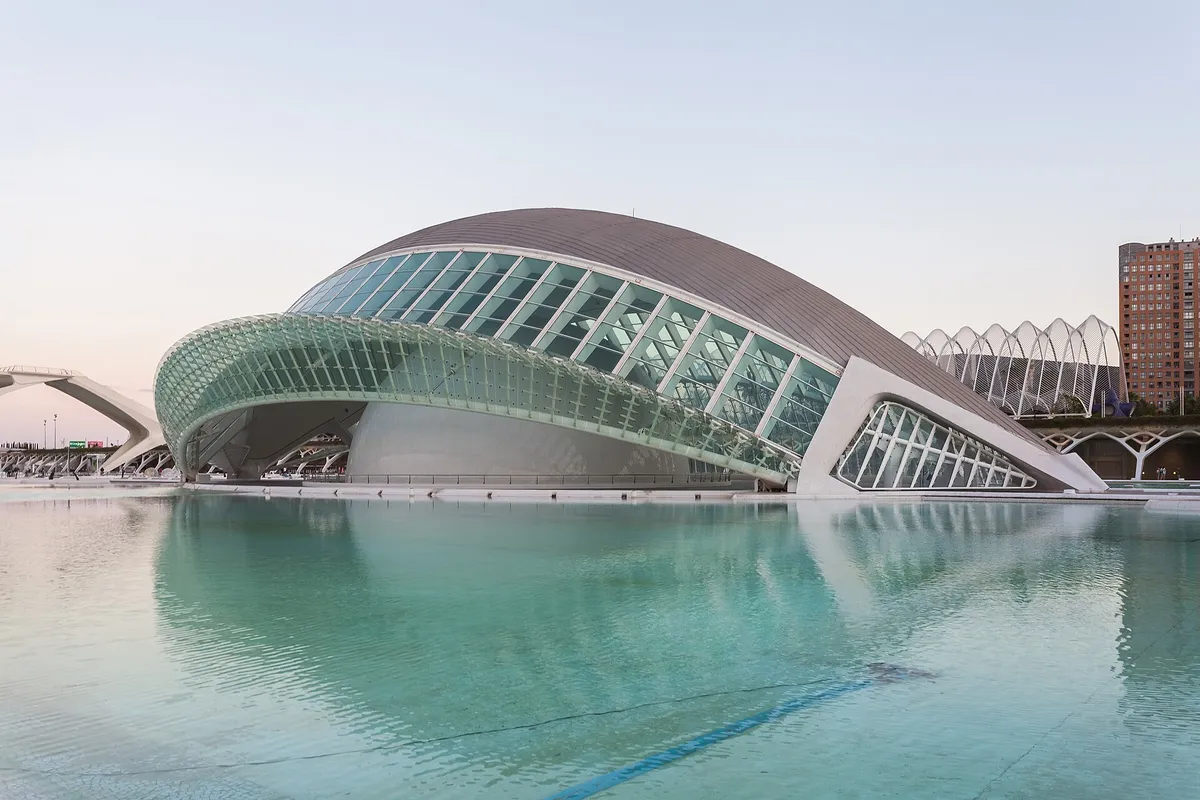
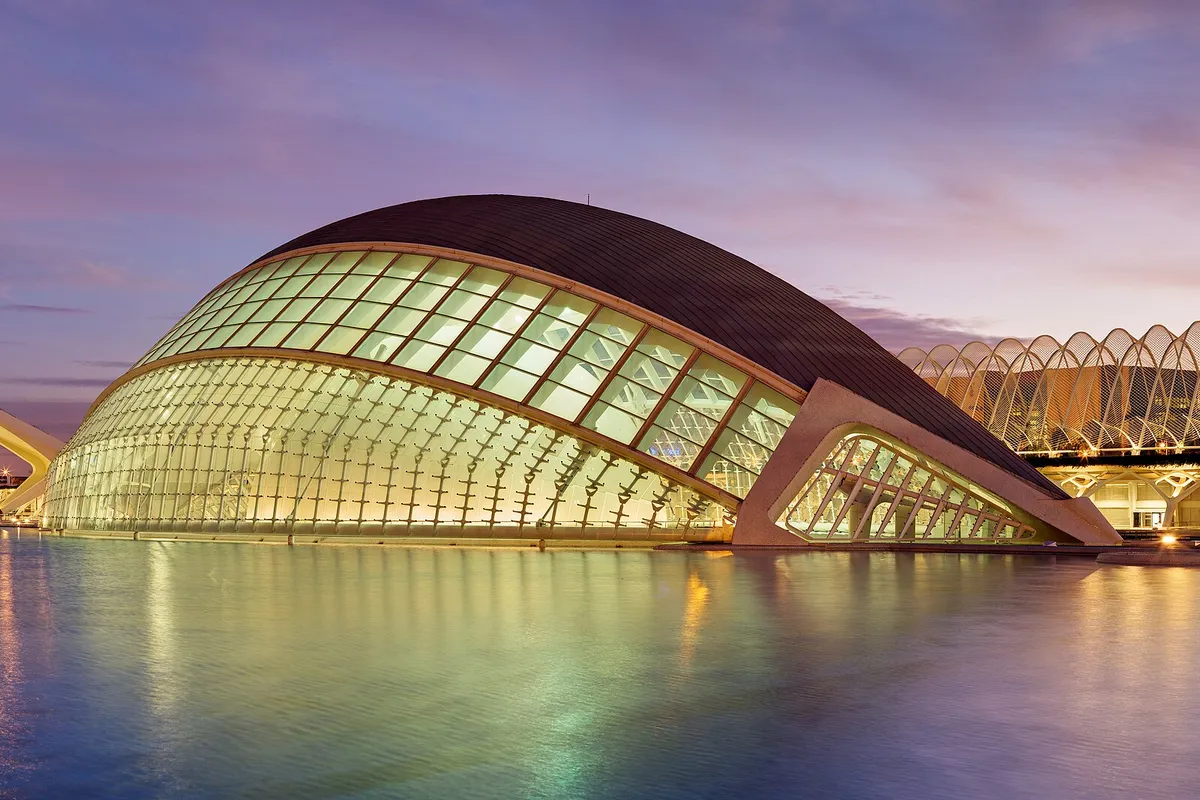
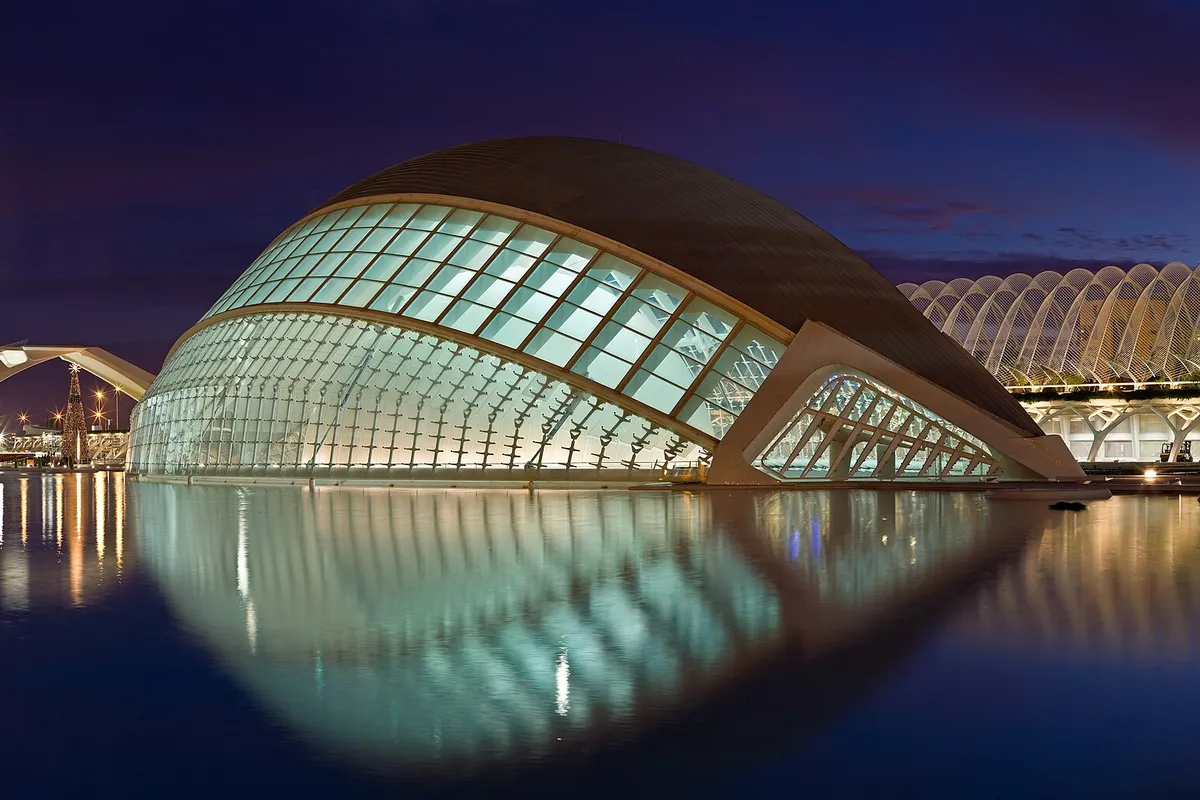
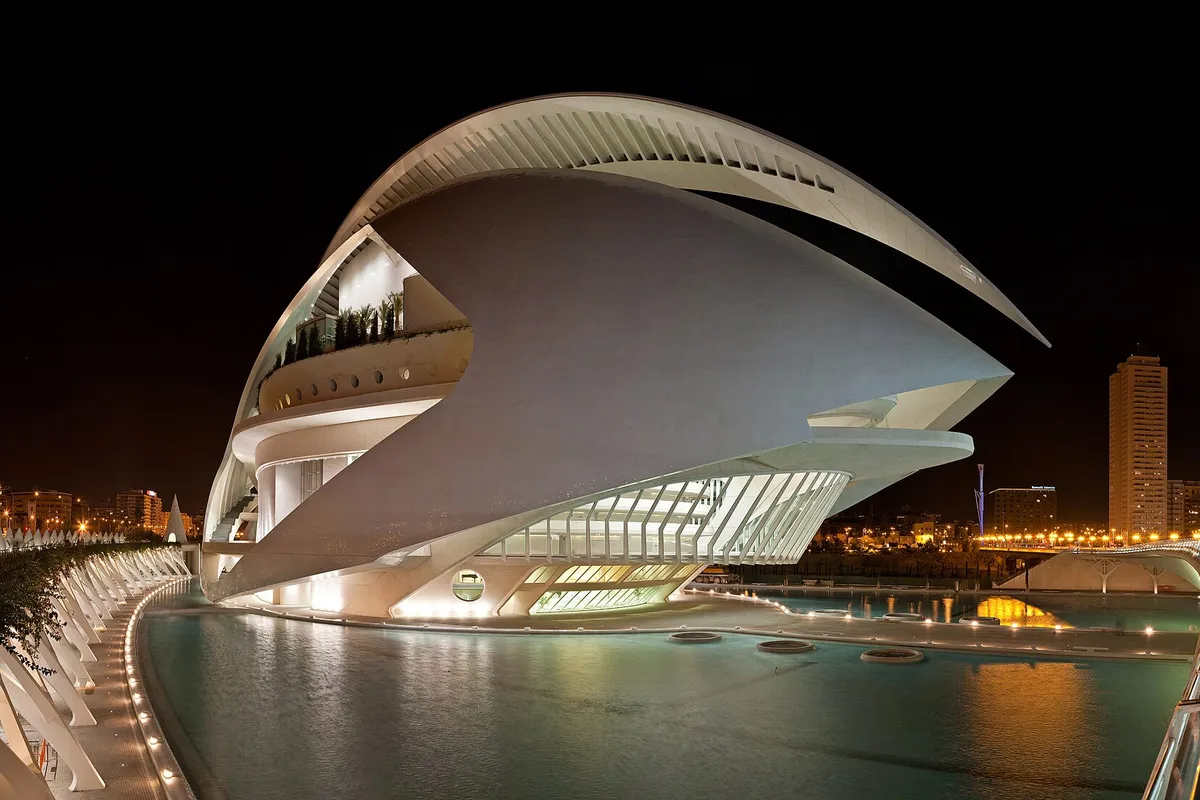
At the eastern end of the Turia stands the complex designed by Santiago Calatrava and Félix Candela: the Hemisfèric, the science museum, the Oceanogràfic aquarium, the opera house, the Umbracle. Around it are recent buildings, generous apartments and hotels with parking. This is the family district, since the aquarium and the science museum are worth two days on their own, plus architecture enthusiasts and anyone arriving by car. It is not the tapas-downstairs district: evenings here are quiet. You are halfway between the old town and the sea, thirty minutes on foot through the park and far less by bike.
El Cabanyal and La Malva-rosa, the sea and the real rice
El Cabanyal was the fishermen's village, a grid of low houses with tiled facades that spent decades under the threat of a road scheme meant to cut it in half. The scheme collapsed, and today it has more character than almost anywhere in the city. Behind it lies the wide Malva-rosa beach, with the terraces where locals eat rice at midday. Perfect in June and September, hard work in January when plenty of places close, and awkward if you want to walk home from the centre at night: it is twenty to twenty-five minutes by tram. Seasonality flips here, cheapest in winter and among the most expensive in August.
El Grao and the Marina, the port
Between El Cabanyal and the City of Arts sits the port and the Marina, redeveloped around the America's Cup years and now occupied by sailing schools, restaurants along the docks and events. Hotels tend to be recent and low season rates can be genuinely good: it suits arrivals by sea, watersports people and anyone who wants the coast without El Cabanyal's happy disorder. The trade-off is less atmosphere.
Benimaclet, the budget card
North-east, beyond the Turia, Benimaclet was a farming village swallowed by the city, and it kept its church square, its low houses and the bars serving students from the two nearby universities. This is where you find the lowest rates in Valencia with a commute that still works: ten minutes by metro or tram to the centre, around twenty to the beach. It makes sense for long stays and tight budgets, much less for a two-day trip you need to optimise or for upper-category hotels, which barely exist here.
What it costs to sleep in Valencia: indicative bands
The figures below are orders of magnitude for a mid-range double room, not promises: rates move daily with demand, as we explain in how dynamic hotel pricing works.
- Ciutat Vella (La Seu, La Xerea, Sant Francesc): low season 70-110 euros, high 120-200 euros
- El Carme: low 60-100 euros, high 110-180 euros
- Russafa: low 65-105 euros, high 110-175 euros
- Pla del Remei and Gran Via: low 70-115 euros, high 120-190 euros
- Ciutat de les Arts: low 60-95 euros, high 110-170 euros
- El Cabanyal and Malva-rosa: low 50-85 euros, high 120-220 euros
- El Grao and Marina: low 55-90 euros, high 105-175 euros
- Benimaclet: low 45-75 euros, high 80-135 euros
Other useful ranges: a hostel bed 20-40 euros, a set lunch 13-18 euros, rice or paella in a restaurant 18-28 euros per person with a two person minimum, horchata with fartons 4-6 euros, a central car park 18-28 euros a day.
Two honest warnings. During Fallas in March rates often double or triple against high season and many properties impose a three or four night minimum, so book far ahead and read when to book a hotel. And on local taxes: the Valencian Community has announced and then withdrawn a regional tourist tax more than once, so ask your property to confirm what is included, keeping an eye on the extras we cover in resort fees and tourist taxes.
Getting in from the airport and getting around
The airport is at Manises, about ten kilometres west, connected to the centre by metro: lines 3 and 5 reach the central stops in a little over twenty minutes, with an airport supplement on the ticket. Fares change over time, so check the current table on Metrovalencia. A taxi takes under twenty minutes and costs indicatively between 20 and 30 euros.
From Madrid the high speed train takes around two hours and arrives at Joaquín Sorolla, a few minutes on foot from the historic Estació del Nord; if you are building a wider Spanish itinerary, see also where to stay in Madrid and where to stay in Barcelona. In town a car is a liability: much of the centre is pedestrianised or restricted and parking costs real money. What you need is comfortable shoes, the city bike share and, for longer hops, metro, tram and buses. Official visitor information sits on Visit València.
When to go: Fallas, summer and the right season
- March, Fallas week (15 to 19): one of the most intense festivals in Europe, with the midday mascletà and the monuments burned on the final night. Extraordinary to witness, terrible to improvise: peak prices and almost no availability inside three months.
- April, May and June: the best stretch of the year. Long days, swimmable sea from late May, a busy but not saturated city.
- July and August: hot and humid, punishing early afternoon sun, seaside districts at their most expensive.
- September and October: for autumn 2026 this is the window we would pick. The water stays warm into mid October, rates come down, and 9 October is the regional holiday.
- November to February: the 2026-27 winter will be mild by day and cool at night, with the lowest rates of the year. Museum, market and unhurried rice season, and a decent answer to summer crowding elsewhere, a theme we take up in overtourism and alternative destinations.
One note belongs here. In October 2024 a violent storm caused severe flooding in several towns of the province south of the city. It was a serious event and people locally still talk about it. The city of Valencia, its old town, its beaches and its transport links operate normally and welcome visitors; if you plan day trips inland, check current official information before you set off.
Where to eat rice where the locals eat it
Classic Valencian paella comes from the land, not the sea: chicken, rabbit, garrofó and ferradura beans, tomato, saffron. No chorizo, no cream, and seafood rice goes by other names such as arròs a banda or arròs del senyoret. It is a lunch dish, not a dinner dish, and Sunday is a family ritual.
The classic setting is the Albufera lagoon about twenty kilometres south, and the village of El Palmar, where you go on purpose and sit down at midday. Along the seafront between El Cabanyal and Malva-rosa the long-standing terraces have served rice for generations. And the most useful rule: if a place displays photographs of the dishes outside, offers twelve variants and serves paella at nine in the evening, it is not where Valencians go. Between meals, horchata made from tiger nuts with fartons is the local institution, and the village of Alboraya just north is its home.
Five quick questions before you book
First time, where do I sleep? La Seu or La Xerea for the old town, Sant Francesc if you arrive by train and stay briefly.
Centre or beach? Over two or three nights the centre wins, because most of what you came for is there. From July to early September with children, El Cabanyal wins.
Do I need a car? No, and in the centre it is a problem. Rent one only for the Albufera or for leaving the city.
Hotel or apartment? Both work, but tourist accommodation in the Valencian Community must carry an official registration number, so ask for it before you pay. The institutional information is on Comunitat Valenciana.
How far ahead should I book? Outside Fallas you have room to breathe, but refundable rates are usually worth the small premium, as we explain in free cancellation explained.
Once the area is settled, the next step is comparing real rates for your dates. See current prices in Valencia, or start from all destinations.
Edenfinder
Paradise has a price. We find it lower.
We compare prices for the same hotels across every major booking platform, with direct links to the right page.
Search your hotel →Frequently asked questions
First time, where do I sleep?
La Seu or La Xerea for the old town, Sant Francesc if you arrive by train and stay briefly.
Centre or beach?
Over two or three nights the centre wins, because most of what you came for is there. From July to early September with children, El Cabanyal wins.
Do I need a car?
No, and in the centre it is a problem. Rent one only for the Albufera or for leaving the city.
Hotel or apartment?
Both work, but tourist accommodation in the Valencian Community must carry an official registration number, so ask for it before you pay. The institutional information is on [Comunitat Valenciana](https://www.comunitatvalenciana.com).
How far ahead should I book?
Outside Fallas you have room to breathe, but refundable rates are usually worth the small premium, as we explain in [free cancellation explained](/en/blog/cancellazione-gratuita-come-funziona).
From the same section