Tips · August 9, 2026 · 8 min read
Day use hotel: when a room for a few hours is worth it
What a day use hotel is, how the daytime rate is built, what quietly is not included, and which airport hotels sit inside or outside security.

A day use hotel is a room sold for part of a day: check-in and check-out fall on the same date, and the night never happens. Accor writes the definition into its own loyalty terms, calling Day Use the use of a hotel room or office space solely during the day. It solves a problem every traveller knows: the hours when you no longer have a room, or do not have one yet, and nowhere sensible to sit.
The textbook case is landing at seven in the morning with check-in at three in the afternoon. Premier Inn, which publishes its own times, lists check-in at 3pm and checkout at noon and sells early check-in from 11am for a fee. Buy it, and a 7am arrival still leaves four hours unaccounted for.
What a day use hotel is, and how long it lasts
There is no single block: every operator sells its own duration, and that is the first thing to check.
- BYHOURS, the Spanish platform, sells stays of 3, 6 or 24 hours and lets you pick the check-in hour.
- HotelsByDay describes a day rate as a booking of 3 to 11 daytime hours, with sample bands of 8am to 4pm or noon to 6pm.
- Dayuse.com asks you to pick a slot somewhere between 6am and 11pm.
- The transit hotel at Zurich Airport sells two daytime bands only, up to 4 hours and more than 4 hours, with a 7pm checkout.
- MY CLOUD, inside Frankfurt Terminal 1, books from 3 to 24 hours.
- Minute Suites, at US airports, starts at one hour and then adds 15-minute increments.
A fixed six-hour block makes you buy six hours even if you use three; an hourly price with a floor charges for what you use, but never below a threshold. Before comparing two prices, compare the durations.
The five situations where a room for a few hours pays off
The genuinely good occasions are fewer than the advertising suggests.
- A long layover. Six, eight, ten hours between flights, usually with no checked bag to collect.
- Landing at dawn. You arrive at 7am, the room is ready at 3pm, and you have a meeting at 11.
- An evening departure. You leave the hotel at noon and fly at 10pm: ten hours dragging luggage.
- A working day between two meetings. Accor sells day use explicitly as office space too, and the Munich cabins advertise a separate desk with internet included.
- A break between trains. BYHOURS lists Madrid Atocha and Sants in Barcelona among its own search entry points, so the rail case is a marketed category, not an invention.
Outside those five, something else usually wins: if all you need is a shower, buy a shower. And if the uncovered day repeats every week, the honest comparison is with an ordinary hotel rate, as in the guides on hotels for business travel and long stays while working remotely.
How the daytime rate is actually built
The platforms talk about enormous savings: Dayuse.com advertises up to 75% off compared with an overnight stay, BYHOURS says up to 70%, HotelsByDay quotes day rates 50 to 75% below nightly ones while noting these are examples only. None of the three publishes a methodology, so nobody knows which nightly rate the comparison runs against. Treat them as claims by an interested party.
The most useful number is a rate card published by an airport operator, where day and night sit on the same page. Zurich's transit hotel price list, valid from 1 November 2025, prices a single at CHF 90 up to 4 hours and CHF 120 beyond 4 hours, against CHF 150 for the night; a double is CHF 120 and CHF 150 by day, CHF 200 at night. The long day block therefore costs 80% of the night price for a single and 75% for a double, while the short block drops to 60%: a real discount, and considerably shallower than the advertising implies.
The second model is purely hourly. The napcabs sleep cabins at Munich Airport charge EUR 17 an hour between 6am and 10pm and EUR 12 an hour between 10pm and 6am, with a EUR 34 minimum either way; the XL cabin runs EUR 24.50 and EUR 18 an hour, minimum EUR 49. Note the counterintuitive part: the night hour is cheaper, the opposite of what a hotel rate card does. napcabs gives no reason; the likely one is the occupancy logic behind hotel dynamic pricing.
Third, stacking hours almost never pays, and Minute Suites says so in writing, with an eight-hour overnight block on a dedicated rate. Payment timing shifts too: Dayuse.com advertises free cancellation until the last minute and payment at the hotel, and YOTELAIR at Singapore Changi takes payment on arrival for hourly stays. Softer terms than most overnight rates, as the guide to free cancellation explains.
What is included, and what quietly is not
Breakfast, almost never. At YOTELAIR Schiphol it is a paid add-on at GBP 9.95 per person, arranged by emailing the hotel with your booking reference; at Paris Charles de Gaulle it is GBP 10. Zurich's transit hotel serves no meals: reception sells ready meals you heat yourself, and what is included is coffee, tea, water, towels, a hairdryer and wi-fi.
The bathroom may be down the corridor: Zurich's price list puts showers and toilets in the corridor, and in Bangkok the Miracle Transit Hotel sells its four-hour room in a shared bathroom version.
Then come the extras that look included and are not. At Singapore, YOTELAIR sells lounge access at S$11.99 an hour, gym access at the same price and walk-in showers at S$23.98 for fifteen minutes; on the airside at Istanbul, lounge access is EUR 80 per person. In the US, HotelsByDay displays day rates with tax and fees excluded, so the big number is not the total: the same mechanics as in the guide to resort fees and tourist taxes.
Finally, loyalty, where Accor publishes the rule openly. Its programme terms say Day Use earns Points but no Status Nights, carries none of the elite benefits, cannot be paid for with points and cannot be improved with a suite upgrade. If you are chasing status, a day room moves you nowhere, as the guide to hotel loyalty programmes sets out.
Airport hotels: inside or outside security
The decisive question is not the price, it is which side of security the hotel sits on. An airside hotel is past the security checkpoint and passport control: you reach it without leaving, but as a rule with hand luggage only and only with the right boarding pass. A landside hotel sits before it: you can bring the suitcase, but you must exit and queue again.
Heathrow's own FAQ says No1 Bedrooms is its only airside hotel, inside the No. 1 Lounge in Terminal 3, available from 06:00 to 22:30, and adds flatly that Heathrow has no sleeping pods. Zurich's transit hotel is by Gates D in the non-Schengen area, unreachable from the Schengen side between 23:00 and 05:30, and closed from 9 to 22 November 2026 for refurbishment. Frankfurt's MY CLOUD is behind the Terminal 1 checkpoint at Gate Z25, but only for travellers with at least one non-Schengen flight, with entry from 5am to 10pm.
The other side matters as much. Rome Fiumicino's HelloSky is expressly landside, open 06:00 to 22:00, and Aerotel Madrid sits in Terminal 4 outside the restricted area. At Singapore, while the Terminal 1, 2 and 3 hotels are inside the transit halls, YOTELAIR is at Jewel: Changi's official directory warns that you will need to clear immigration to stay there. That is the most expensive mistake in the category, because once you are out you cannot go back until your airline counter opens.
Sleeping in the airport: pods, cabins and free rest zones
One step down from a room there is a middle option. The napcabs at Munich sit both behind security and in the public area of Terminal 2, open around the clock. Minute Suites runs private suites past security at ten US airports, from Atlanta to JFK, and warns that not every location has a shower. In Dubai, the Sleepover lounges sit in four places, all in departures, and Madrid Terminal 4S holds 32 capsules, three-hour minimum.
Then there is the part almost nobody uses: sleeping in the airport for free, where the airport provides for it. Changi publishes free rest areas across all four terminals, inside the transit halls, open 24 hours, and its FAQ confirms access does not depend on your airline or cabin class. Doha runs Quiet Rooms on Concourses A, B, C and D, with separate rooms for men, women and families. At Zurich, if you do not need a room at all, a couch in the rest area is CHF 45 up to 4 hours and CHF 60 beyond.
For a shower alone the price is almost always separate: Plaza Premium's own FAQ says lounge packages do not include shower services unless otherwise specified, and at Zurich a shower with towel is CHF 25 even without a room.
Passports, police registration and city tax
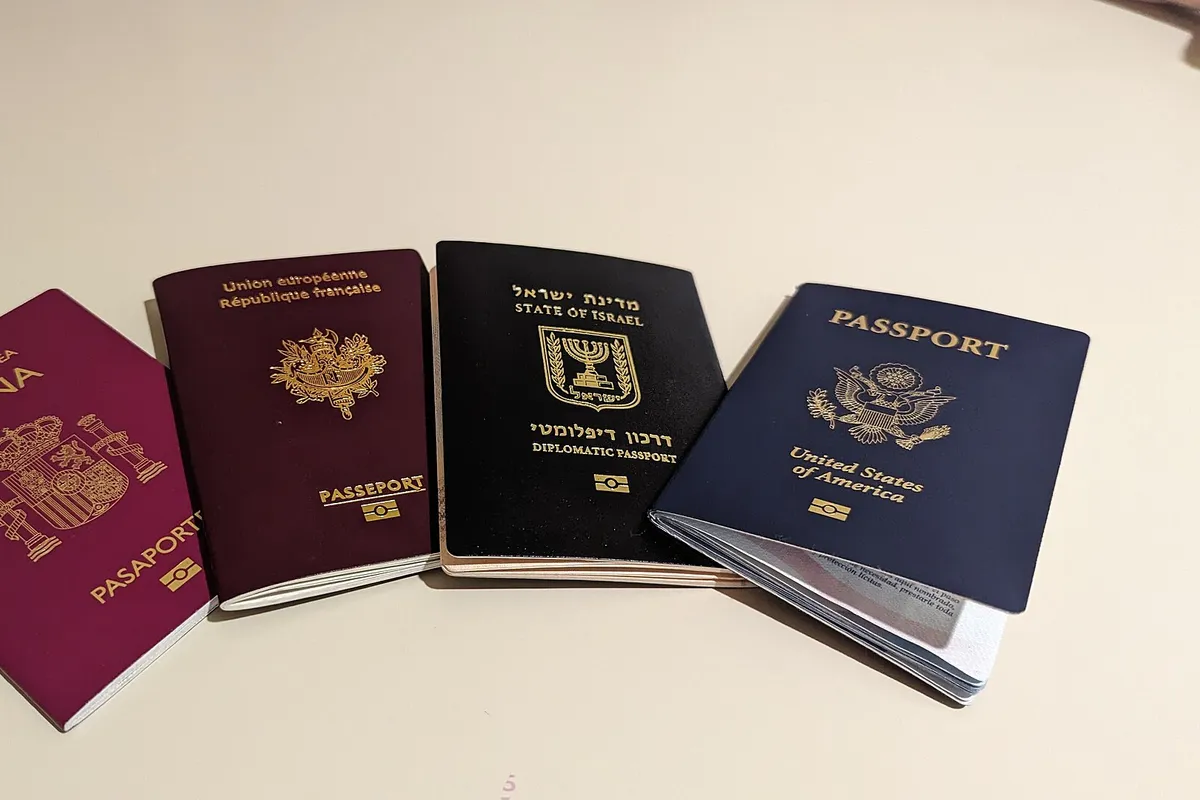
The answer depends on the country, and only Italy states it without ambiguity.
In Italy, the State Police portal for accommodation providers states that guest details go to the local police headquarters within 24 hours of arrival, but that if the stay lasts less than 24 hours they must be sent on arrival itself. Every day room falls into that second case.
In Germany, the federal registration act requires foreign nationals in commercial accommodation to sign a registration form on the day of arrival and show a valid passport. In Spain, Royal Decree 933/2021 defines the regulated activity as providing space for an overnight stay, so the law is written around the night and hotels apply the procedure anyway.
Tax varies sharply by country. The consolidated Catalan tourist tax law taxes a stay by days or fractions, with or without an overnight, so a day room in Barcelona can be taxable; France goes the other way, and the government's citizen information service states that the taxe de séjour is due per person and per night. The country by country picture is in the guide to tourist taxes in Europe.
The free alternative: early check-in and late check-out
Before buying a room by the hour, try the free route first. Heathrow's hotel page answers it plainly: ask your hotel before you travel, because early check-in and late check-out depend on availability. It is a request, not a right, and it costs nothing to ask.
When it becomes a product, it has a price list. Premier Inn publishes 3pm check-in and noon checkout, and sells early arrival from 11am and a late departure to 2pm, both for a fee and not at every hotel. Zurich prints the price of extra time on its own rate card: CHF 10 per additional hour for a room, CHF 5 for a couch, bookable only at reception.
The practical test is simple: if you are two or three hours short on a booking you already hold, ask for them; if you are eight hours short, or hold no booking at all, the room by the hour is the right product. The requests that actually land are collected in the guide to early check-in and late check-out.
So is a day use hotel worth it?
It is worth it when the uncovered time runs past five or six hours and the daytime price stays well under a whole night. Under three hours, a paid shower or a free rest area almost always wins; over twelve, compare a real night, which usually brings breakfast, a private bathroom and a place for the bag.
Three questions to ask before paying, every time:
- Exactly how many hours am I buying, and from what time to what time?
- Is the bathroom private or shared, and is the shower included or charged?
- Does the displayed price include tax and fees, and do I pay now or on arrival?
And the honest note. Edenfinder compares stays with an overnight: we show and compare real, currently available prices, and the booking is completed on the supply partner rail with Nuitee as merchant of record. For a pure day room we are not the right tool, and we would rather say so: go to the specialist day-use platforms, or straight to the hotel, often the most transparent option of all, as the guide on booking direct or through a comparator explains.
If the uncovered day does end in a real night, that part we do well. Compare hotels in London around a Heathrow connection, hotels in Singapore when a layover turns into a stop, or hotels in Dubai if the transit hall is not enough. Read the London city guide before choosing a district, or start from the destinations hub.
Edenfinder
Paradise has a price. We find it lower.
We compare prices for the same hotels across every major booking platform, with direct links to the right page.
Search your hotel →Frequently asked questions
How much do you actually save compared with a night?
There is no reliable average: Dayuse.com advertises up to 75 percent off, BYHOURS up to 70 percent, and neither says which nightly rate it measures against. The most useful public rate card, because it prints day and night on the same page, is Zurich Airport's transit hotel, valid from 1 November 2025: it puts the daytime block at 60 to 80 percent of the night price, so 20 to 40 percent off. On 9 August 2026 the daytime deals shown on Dayuse.com ran between 35 and 58 percent below the nightly price. The only comparison worth trusting is the same hotel's own night price for the same date.
Do I need a flight to book an airport hotel by the hour?
It depends which side of security the hotel sits on. Airside, yes: Zurich admits you only with a boarding card and hand luggage, Frankfurt's MY CLOUD wants a passport, a boarding pass and at least one non-Schengen flight, and the airside cabins at Istanbul are for international travellers only. Landside, no: at Istanbul, for example, the airport writes that anyone can book on the landside, including people who are not flying at all.
Can I bring checked luggage to an airport day room?
Not to an airside one: Zurich, Schiphol, Frankfurt and Paris Charles de Gaulle all state hand luggage only. If you have a checked bag the choice is made for you, because collecting it means leaving the secure area: you need a landside hotel. The suitcase comes with you there, but afterwards you queue again for security, and for passport control on an international departure.
Can I pay for a shower instead of a room?
Yes, at many airports, and it costs a fraction of a room. Zurich sells a shower with towel and shower gel for CHF 25 with no room at all, but it sits inside the airside transit hotel by Gates D in the non-Schengen area, which you enter only with a boarding card and hand luggage. YOTELAIR Singapore has walk-in shower cabins at S$23.98 for fifteen minutes, but it is in Jewel, landside: you have to clear immigration to get there. Doha's Vitality centre on Concourse B is airside and open to all passengers from 06:00 to 02:00 the next morning. One catch with lounges: the shower is usually not in the entry price, as Plaza Premium states in its own FAQ.
Can I book a day room on the usual hotel sites?
Not on Edenfinder: we compare stays with an overnight, and a room sold by the hour does not appear in those results. Day use runs through the specialist platforms or the hotel itself, often the most transparent route: Zurich, MY CLOUD and YOTELAIR sell hours on their own channels, while Accor sells day use, meaning check-in and check-out on the same date, from its own site. If the uncovered day does end in a real night, that is where a comparator earns its keep, and direct booking against comparator is set out in the dedicated guide on the blog.
From the same section