Tips · September 6, 2026 · 9 min read
Passport validity rules: the six month rule and the ten year trap
Two independent tests, not one, and a passport can pass one and fail the other. The Schengen wording, the six month rule, EES, and real renewal times.
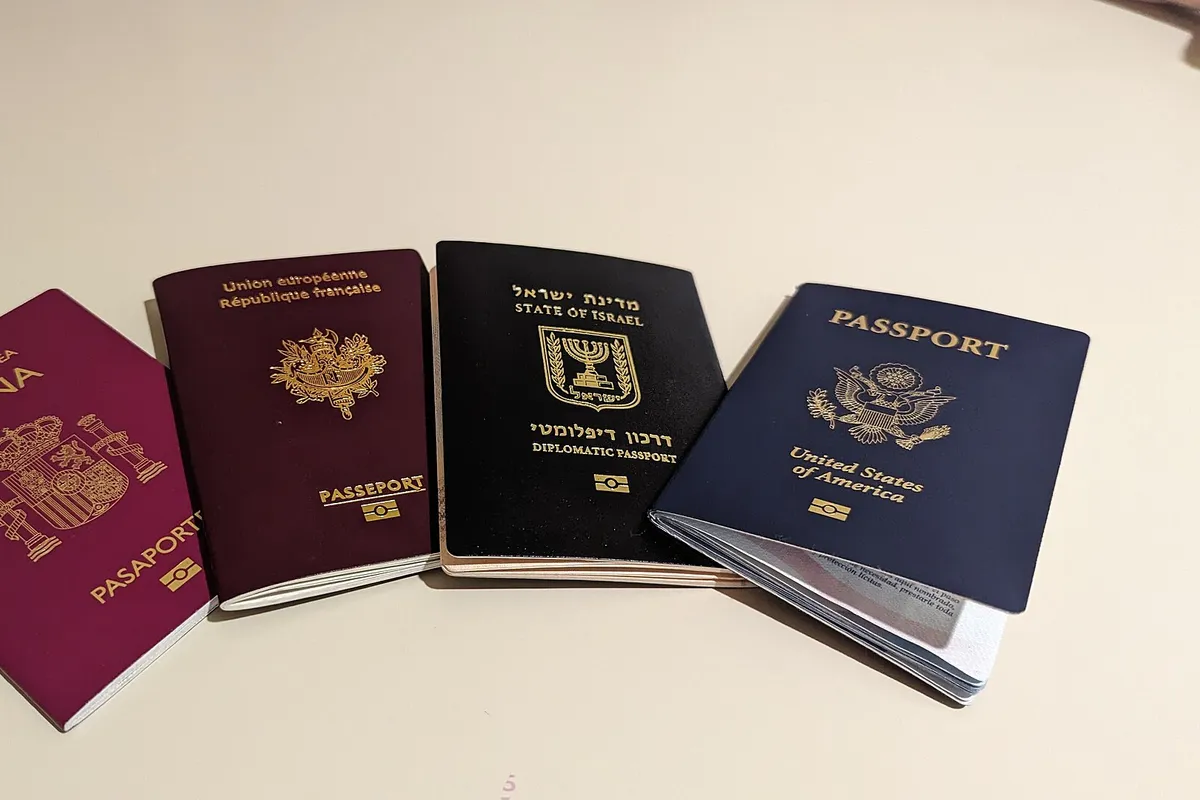
There are two Schengen tests, not one. The first reads the expiry date. The second reads the date of issue, and almost nobody reads that one, which is why it is the line that strands people at the gate.
The classic casualty is a passport renewed early. British practice used to carry the unused time onto the new book, up to nine months, so a UK passport can show an expiry ten years and nine months after its date of issue. The expiry looks generous, the issue date is over ten years old, and for the Schengen area that alone is a fail. Outside Europe the test is usually six months of validity, counted from the day you arrive in some countries and from the day you leave in others.
Everything below was read from primary sources on 6 September 2026, and rules like these move without notice, so check the destination's own authority before you travel. The formalities themselves are in ETIAS and the EU entry exit system.
The Schengen rule, exactly as it is written
The instrument is Regulation (EU) 2016/399, the Schengen Borders Code, OJ L 77 of 23 March 2016, amended seven times since; the text in force is the consolidated version of 12 October 2025. Article 6(1)(a) sets two cumulative conditions on a third country national's travel document.
- Validity "shall extend at least three months after the intended date of departure from the territory of the Member States".
- The document "shall have been issued within the previous 10 years".
Read the first one slowly. Departure from the territory of the Member States, not from the country you happen to be visiting. Land in Rome, train to Vienna, fly home out of Vienna, and the three months run from the Vienna exit. On a two country trip that moves the qualifying date by a week or more.
The second condition is measured at a different moment. The Commission's Your Europe portal, last checked 19 August 2026, counts the ten years to the day you enter the EU, while the three months run from your departure. The FCDO adds what most guidance drops: the expiry does not have to fall within ten years of the issue date.
Then the part that decides what you can do about it. Article 6(1)(a)(i) ends with "In a justified case of emergency, this obligation may be waived", and that waiver attaches to the three month limb alone. Nothing in Article 6 lets a border guard waive the ten year limb, so an old issue date leaves no discretion to appeal to and renewal is the only fix.
Four checks, in this order: - Find the date of issue. Same page as the expiry, and the one you have never looked at. - Add ten years. If your arrival falls after that, renew. - Take the last day you leave the Schengen area, not the first country, and add three months. - If that falls after your expiry date, renew.
The six month rule, and why the wording decides
There is no six month rule in EU law, and no blank page rule either. Blank page requirements come purely from destination states, no primary publisher keeps a consolidated list, and they change without an announcement. The anchor is what matters: six months from arrival and six months from departure are different dates. From the FCDO entry requirements pages, all read on 6 September 2026:
- Thailand and Egypt: six months after arrival, one blank page.
- China, India, Indonesia, Kenya and Vietnam: six months after arrival, at least two blank pages. Renewing while in China means contacting the local exit and entry office or the hotline 12367.
- Namibia and Zimbabwe: six months after arrival, three blank pages, the highest here. Zimbabwe gives the reason: in case you have to exit through a neighbouring country or leave at short notice.
- South Africa: thirty days after the date you leave, plus two blank pages. Anchored to departure, not arrival.
- New Zealand: three months after the day you plan to leave. Turkey: 150 days after arrival plus one blank page, which is not six months, unless you live in Turkey.
- The Maldives: one month after arrival. Japan and the United States: nothing beyond the length of your stay, though Japan wants a blank page for the visa stamp.
- United Arab Emirates: six months for visitors, three for UAE residence permit holders, three for transit that skips immigration.
Singapore's Immigration and Checkpoints Authority asks everyone except Singapore passport holders for "a minimum validity of 6 months" without saying from what, so take the stricter reading. And that list is British advice for British citizens: for your own document check Viaggiare Sicuri, the Recomendaciones de viaje of the Ministerio de Asuntos Exteriores or the Reise- und Sicherheitshinweise of the Auswärtiges Amt.

What the Entry Exit System changed about your passport
The EES began rolling out on 12 October 2025 and was fully operational at every external crossing point on 10 April 2026, with over 145 million crossings recorded between 10 April and 27 July 2026. On your first crossing the officer photographs your face and scans your fingerprints, and you meet a passport control officer even if you started at a self service kiosk. Later crossings only verify what is stored, and with a biometric passport you usually skip the officer.
Registration is free and the short official line is that your record lasts three years. Regulation (EU) 2017/2226, consolidated text of 12 June 2026, is more precise: three years after the exit or refusal record (Article 34(1)), five years where no exit record follows the authorised stay (Article 34(3)), and the individual file three years and one day after the last exit when no new entry follows within three years (Article 34(2)). Children under twelve give no fingerprints under Article 17(3), though a photo can be taken.
The exemptions are narrower than they look. Nationals of EU countries and of Iceland, Liechtenstein, Norway, Switzerland, Andorra, Monaco and San Marino stay outside, as do holders of a Vatican City State or Holy See passport. Long stay visa and residence permit holders are exempt too, except that permits and long stay visas issued by Cyprus or Ireland exempt nobody. The EES runs in 29 European countries; Cyprus and Ireland are not among them and still stamp by hand.
What happens to that record when you renew your passport is unpublished, and we will not reason by analogy: for ETIAS a new passport means a new authorisation, but the EES equivalent is stated nowhere we could reach. ETIAS was not in operation on 6 September 2026 and no start date exists. The fee will be EUR 20, up from EUR 7, with under 18s and over 70s exempt.
Renewing it: what it actually takes right now
Every figure here was read on 6 September 2026, and most of these authorities date nothing, so read them again on the day you act.
- United Kingdom: HM Passport Office says usually three weeks, counted from when it receives your documents. GBP 102 online, GBP 115.50 on paper, plus two urgent routes, the one week Fast Track and Online Premium.
- Ireland: ten working days for a simple adult renewal, fifteen for a complex one or a child, twenty for a first time online application, about six weeks on paper. Postage excluded.
- Germany: no national figure exists. Berlin publishes up to eight weeks standard and four working days express if you file by 11:00, at EUR 70.00 from age 24 and EUR 37.50 below, doubled if Berlin is not your main residence.
- Spain: the national police say the passport is issued in minutes at a single appointment, for EUR 30.00. The queue for that appointment is the real wait and nobody publishes it.
- Italy: no national standard. Fees are EUR 73.50 plus EUR 42.70. One Questura page quotes fifteen to thirty days but still shows a superseded fee.
- Elsewhere: France publishes no national delay at all, and the Netherlands quotes about five working days to collection. The US Department of State would not open its site for us, so read the official processing times page.
Three of the six European authorities here publish no usable national figure, and in Spain and Italy the real number is the appointment queue, which nobody publishes.

The problems that are not about dates
A passport can be perfectly in date and still be refused. HM Passport Office treats one as damaged when you cannot read your details, when pages are ripped, cut or missing, when the cover has holes or is coming away, or when there are ink or water stains. Then you must replace it, and you may not be able to travel with it. Vietnam has refused British nationals both entry and exit over damage.
Appearance matters less than people fear: you need a new passport only if you can no longer be recognised from the photo, after plastic surgery for example, and that case needs a countersignature. A name change is different, because unexpired visas in the old book may stop being valid. Nor does a border wave through a full passport: in Italy, exhausted pages sit alongside theft and loss as an official ground for a new document.
Children, whose passports expire between trips
Children's documents are short by design, and the gap between two family holidays is often longer than the passport.
- Italy: three years under three, five years from three to eighteen. Fingerprints and signature from twelve, and since 26 June 2012 every minor needs an individual document with both parents' consent.
- Spain: two years under five, five years from five to under thirty, ten from thirty.
- Germany: the Kinderreisepass was abolished on 1 January 2024, so children need a standard electronic passport, valid six years below 24 and ten from 24. Existing ones run to expiry but cannot be extended.
- France: five years for a minor, stamp EUR 17 from 0 to 14 and EUR 42 from 15 to 17. United Kingdom: under sixteens, GBP 66.50 online or GBP 80 on paper, five years.
If a family room is next, what to ask a hotel before you book covers the rest.
Check the passport before you buy the non refundable rate
The cheapest rates are the ones you cannot cancel, and they are often the right choice, as we argue in non-refundable rates. But no cancellation policy covers being turned away at the gate over a document. Free cancellation protects you against changing your mind. EC 261 pays for the airline's failures, not yours. And a travel insurance policy will almost always exclude a claim that begins with an invalid travel document.
So passport first, rate second: two minutes with the issue date, the expiry date and the destination's own entry page, before the money is committed.
Once the document checks out, compare where you are going: hotels in Lisbon, or start from our destinations.
Edenfinder
Paradise has a price. We find it lower.
We compare prices for the same hotels across every major booking platform, with direct links to the right page.
Search your hotel →Frequently asked questions
What is the six month passport rule?
It is not one rule but a habit shared by many destination states. Thailand, China, India, Indonesia, Egypt, Kenya, Vietnam, Cambodia, Namibia and Zimbabwe all want six months of validity counted from the day you arrive. Others count differently: South Africa asks for thirty days after you leave, New Zealand three months after departure, Turkey 150 days after arrival, the Maldives one month. Japan and the United States ask only that the passport cover the stay, though Japan still needs a blank page for the visa stamp.
My passport expires in five months. Can I still fly to Spain?
Check both limbs of Article 6(1)(a) of the Schengen Borders Code. The expiry must be at least three months after the day you leave the Schengen area as a whole, so five months covers a normal holiday. The second limb is the one that catches people: the passport must also have been issued within the previous ten years, counted to the day you arrive. If the issue date is older than that the trip is off, whatever the expiry says.
Does the ten year issue date rule still catch British passports?
Yes. HM Passport Office no longer carries unused months onto a new passport, but before 1 October 2018 it added up to nine of them, so a British passport can show an expiry as much as ten years and nine months after its date of issue. The FCDO still warns about it on its Schengen country pages. No border guard can waive that limb: the emergency waiver in Article 6(1)(a)(i) applies only to the three month condition.
How long does a UK passport renewal take right now?
HM Passport Office said on 6 September 2026 that you will usually get your passport within three weeks, and that it will tell you inside those three weeks if longer is needed. The clock starts when it receives your documents, not when you submit the form. Renewal costs GBP 102 online or GBP 115.50 on paper, and there are two urgent routes, the one week Fast Track and Online Premium, each with its own eligibility limits.
If I renew my passport, do I have to register with the EES again?
Nobody has published the answer. The ETIAS rule is explicit, an authorisation is tied to the passport used to apply and a new passport requires a new authorisation, but no official EU page states the equivalent for the Entry Exit System, so we are not going to guess. What is documented: EES registration is free, a digital record covers three years, and on a first crossing the officer takes your photo and fingerprints and does not stamp the passport.
From the same section