Flights · September 6, 2026 · 9 min read
Hand luggage rules 2026: liquids, sizes and what applies
The 100 ml rule was never repealed. Which airports allow 2 litres today, why it changes between terminals, and what size of bag you are really owed.
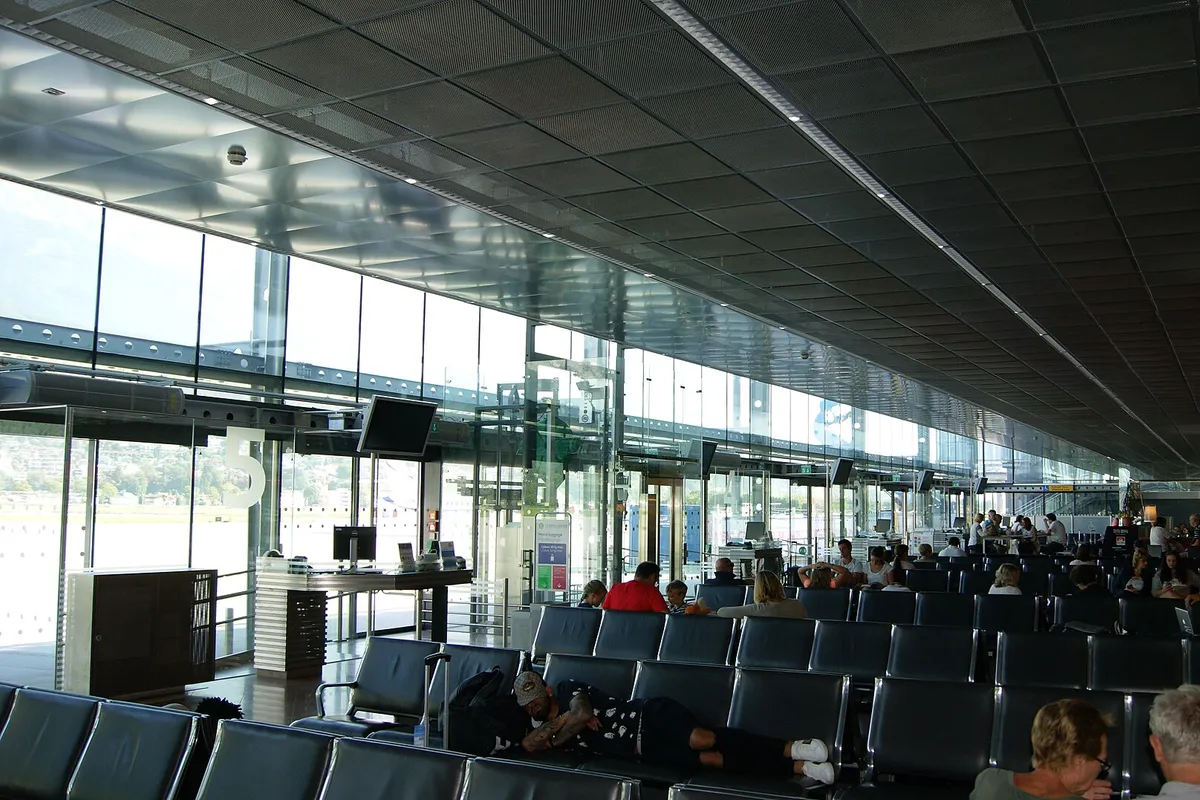
On a Tuesday morning at Frankfurt you can walk through security in Terminal 3 with a 1.5 litre bottle in your bag and nobody says a word. Take a flight leaving from gate C4, same airport, same morning, and that bottle goes in the bin. Fraport publishes both rules on the same page. Neither is a mistake.
That is hand luggage in 2026. The liquid limit is no longer a European rule but a rule of the individual lane, so it changes between two terminals, between a departure and a connection, and between the outbound and the return of one trip. The size of the bag is a separate problem with a separate answer: no EU law fixes it, the airline writes the numbers, and the free 40 x 30 x 15 cm item everybody quotes is an industry promise rather than a right.
The rule that was never lifted
You have read somewhere that the 100 ml limit is over. It is not, and the reason is worth two minutes of your time.
The base rule sits at point 4.1.3.1 of the Annex to Commission Implementing Regulation (EU) 2015/1998, and it is not a ban. It is an exemption from screening: containers of up to 100 ml, in one transparent resealable bag of up to 1 litre, pass without special treatment. Larger containers were always lawful in the cabin if a scanner could actually screen them.
Then came Commission Implementing Regulation (EU) 2024/2108 of 29 July 2024, published in the Official Journal on 31 July 2024 alongside Commission Decision (EU) 2024/2109, and applying from 1 September 2024. It inserted point 12.4.2.10: standard C3 cabin baggage scanners that received the EU Stamp, or EU Stamp pending, before 1 August 2024 may screen liquids only up to 100 ml per container.
That point is still there, both in the consolidated Annex in force from 22 March 2026 and in the version applying from 1 October 2026, and the only amendment adopted in 2026, Implementing Regulation (EU) 2026/449, does not touch liquids.
So how does an airport get out of it? Not through a new law. Recital 9 of the 2024 regulation says the limitation may be removed once the Commission receives reports from the Common Evaluation Process of ECAC showing that revised C3 configurations meet the detection standard. A re-test and a fresh stamp, machine by machine. There is no repeal date because there is nothing to repeal.
It also explains why no official list of cleared airports exists. The deployment detail lives in Commission Implementing Decision C(2015) 8005, which is not published, and the stamps sit in a restricted database. The Commission's own citizen guidance, last checked on 16 June 2026, still gives 100 ml and the 1 litre bag as the European norm.
Where more than 100 ml actually works
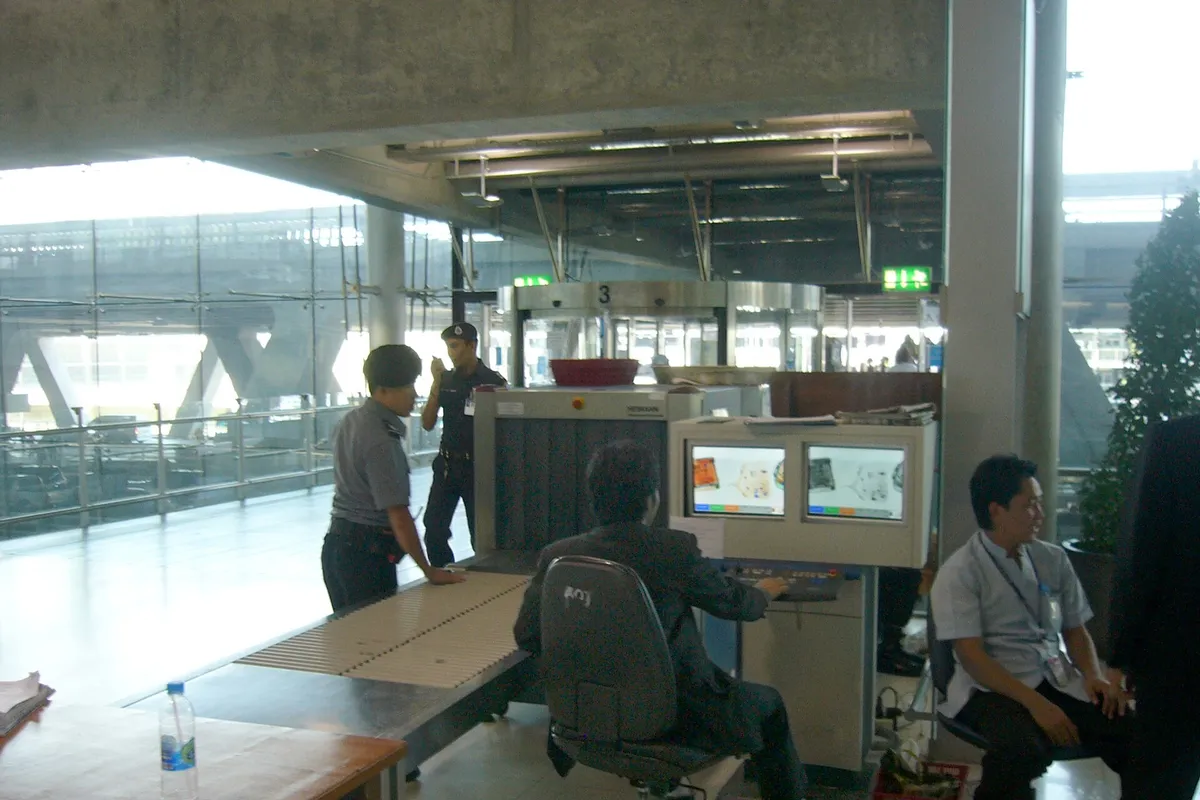
These are airports whose own pages said so on 6 September 2026:
- Rome Fiumicino: up to 2 litres per container since 26 July 2025, with laptops and tablets left inside the bag. The old regime still applies to flights to the USA and Israel for carriers checking in at Terminal 1, and to passengers arriving from non-Schengen countries outside one stop security arrangements. Anything above 2 litres travels empty.
- Dublin: 2 litres per container from midnight on 17 September 2025, and no clear plastic bag needed at all.
- Heathrow: 2 litres at Terminals 2, 3, 4 and 5, liquids and laptops staying in the bag. But nothing above 100 ml on flights to Australia.
- Frankfurt: 2 litres at most Terminal 1 checkpoints and at all of Terminal 3. Still 100 ml at gates C1, C2, C4 and C6, at certain special Terminal 1 checkpoints, and at every transfer checkpoint.
- Munich: 2 litres only where the CT scanners are, which the airport names as Terminal 1 Module D on Level 5, the Terminal 1 Pier and the central checkpoint in Terminal 2. You can still be directed to a conventional lane.
- Zurich: 2 litres since 26 June 2026, but only for passengers who start their journey there. Transfer passengers stay on 100 ml and one 1 litre bag beyond 2026.
- Amsterdam Schiphol: still 100 ml, one bag per person. Schiphol dates that limit to 1 September 2024, which tells you precisely which rule is biting.
Paris, Madrid, Barcelona and Milan are absent on purpose: I could not read a current statement from those operators while writing this, and a gap beats guessing. The only check worth doing is the security page of your departure airport, for both ends of the trip. The Swiss regulator says it plainly: one journey can fall under two different rules depending on the equipment in use.
The exemptions that survive everywhere
- Medicines and baby food. EU law does not exempt them from screening, it obliges airports to screen them, which is a very different thing from taking them away. The UK allows up to 2 litres at every airport for essential medical purposes, special dietary requirements, baby food and baby milk. Heathrow asks for a prescription or a doctor's letter above 2 litres.
- Duty free, but only sealed in the security bag with the receipt visible inside, and only until somebody opens it. On a connection, tell the officer before screening so it can be re-sealed. Switzerland narrows this to purchases made at a Swiss, EU or EFTA airport, or on board a carrier from that zone.
- Empty bottles. A reusable bottle travels fine as long as it is empty at the checkpoint. Zurich accepts a thermos only empty, even under its 2 litre regime.
Two things do not depend on the scanner and are therefore identical at every EU airport. What counts as a liquid: toothpaste, gel, syrup, shaving foam, anything of that consistency, plus the contents of pressurised containers. And blades: knives and scissors measuring more than 6 cm stay out of the cabin.
How big the bag may be, and who actually decides
No EU law fixes cabin baggage dimensions today, and the reform will not fix them either. Recital 45 of the adopted text says airlines should define a reasonable policy on hand baggage dimensions, and leaves uniform minimum rules to a future review.
The case everyone quotes is Vueling, C-487/12, decided on 18 September 2014, where the Court of Justice reasoned, in a passage that was not the operative ruling, that hand baggage cannot be made subject to a price supplement, provided that it meets reasonable requirements in terms of its weight and dimensions. That conditional clause is where the whole dispute lives, because the airline writes the dimensions. Spain read it one way and fined five low cost carriers a combined 178,933,631.99 euro on 22 November 2024, Ryanair alone for 107,775,777 euro. Spanish press reported that on 19 June 2025 a Madrid court suspended the Ryanair and Norwegian penalties as an interim measure, and none of the five fines had a ruling on the merits as of 6 September 2026. On 8 October 2025 the Commission opened an infringement procedure against Spain over that reading, and on 28 January 2026 a Brussels court held that neither Article 23 nor the Vueling case law requires an airline to carry a free bag larger than the one it authorises.
What protects you today is a promise, not a law. On 2 July 2025 Airlines for Europe confirmed that its member airlines had started applying a personal item of 40 x 30 x 15 cm, the size EU transport ministers had agreed on 5 June 2025, with all members in place by the end of the 2025 summer season. It is a floor rather than a cap, no passenger can enforce it, and Wizz Air is not an A4E member.
The published allowances, from the carriers' own pages:
- Ryanair: free bag 40 x 30 x 20 cm under the seat. The 10 kg trolley of 55 x 40 x 20 cm needs Priority.
- easyJet: free bag 45 x 36 x 20 cm up to 15 kg, the largest free under seat allowance among the big low cost carriers. The 56 x 45 x 25 cm bag is paid for.
- Wizz Air: free bag 40 x 30 x 20 cm and 10 kg, trolley 55 x 40 x 23 cm with WIZZ Priority. Wheels may add no more than 5 cm.
- Lufthansa: personal item 40 x 30 x 15 cm in every class, carry on bag 8 kg and 55 x 40 x 23 cm. On Economy Basic short and medium haul you get the personal item only, and there is no add on to buy: you move up a fare, or you hold status.
Read that last line twice. A legacy carrier's cheapest fare now gives you the same cabin allowance as a low cost basic fare, which is worth remembering when you are comparing fares months ahead or picking the cheaper day to fly.
The law that is coming, and is not here yet
The revision of Regulation 261/2004, the same regulation that governs what you are owed for a delay or a cancellation, creates a new Article 11a. Carriers shall permit a personal item into the cabin at no extra cost, defined as up to 40 x 30 x 15 cm or whatever fits under the seat in front. The trolley is not covered: it must be permitted subject to cabin capacity, with no obligation that it be free. Parliament wanted a free trolley and lost it in conciliation.
Two parts are genuinely useful. Recital 42 describes what the free item is for: passports and travel documents, essential medicines, personal devices, reading material, food and drink appropriate to the flight. And Article 11a(2) says that where safety, cabin capacity or an aircraft change prevents carriage in the cabin, the airline may put the bag in the hold, but at no further cost to the passenger. That is the answer to gate bagging fees.
Now the honest part. None of it is in force. Parliament approved the joint text on 7 July 2026 by 646 votes to 12, and as of 6 September 2026 the act had still not been published in the Official Journal. The version I read carries bracketed placeholder dates. There is currently no date on which a free personal item becomes a right in Europe.
One line concerns this site directly. Recital 43 puts the fare display duty on air carriers, intermediaries and meta search engines, so a comparison site like ours will have to show the fare including a hand baggage allowance by default before booking starts. I would rather tell you that now than pretend it is somebody else's rule.
What it costs to get it wrong, and the power banks
easyJet charges 60 pounds for a large cabin bag added at the boarding gate. Lufthansa charges between 60 and 110 euro, CHF 60 to CHF 110 or USD 75 to USD 125, for non compliant carry on taken at check in or the gate. Lufthansa also states that duty free purchases do not count as an extra item, so a bottle bought airside competes with the allowance you already have.
Then the rule that catches people who have never had a liquid confiscated in their life. Munich allows a maximum of two power banks per person, each up to 100 Wh, roughly 27,000 mAh. Zurich allows two power banks of up to 100 Wh and eighteen batteries of up to 100 Wh, in hand luggage only. A spare battery or a power bank therefore cannot travel in a checked bag at all.
Before you leave home
- Open the security page of the departure airport, and of the airport where you connect. Not a travel blog, the airport.
- If either end is not confirmed as a 2 litre airport, pack to 100 ml. It costs you nothing and removes the whole problem.
- Measure the bag with wheels and handles included. That is how it is measured at the gate.
- Check the fare, not the airline. Economy Basic on a legacy carrier and a low cost basic fare now carry the same thing.
- Keep medicines, baby food and any prescription letter accessible, not buried at the bottom.
- Check your document dates too, both passport validity and, for non EU travellers, the new ETIAS and entry exit rules.
- Give yourself the time. Our guide to how early to arrive at the airport has the queue numbers, and on a long connection a day use room near the airport beats eight hours on a bench.
Nobody refunds a confiscated bottle, but what a travel insurance policy needs to include is worth ten minutes before you book. Then compare where you are sleeping the same way you compared the flight: hotels in Rome and the rest of our destination guides, with live prices from the sites that sell, and the tourist tax on top where a city charges one.
Edenfinder
Paradise has a price. We find it lower.
We compare prices for the same hotels across every major booking platform, with direct links to the right page.
Search your hotel →Frequently asked questions
Is the 100 ml rule still in force in 2026?
Yes, as the default. Point 12.4.2.10 of the Annex to Implementing Regulation (EU) 2015/1998, inserted by Regulation (EU) 2024/2108 and applicable since 1 September 2024, is still in the consolidated text and limits C3 scanners stamped before 1 August 2024 to 100 ml per container. Individual airports escape it only by having their equipment re-tested and re-stamped, so the limit lifts machine by machine rather than by any European repeal date.
Which airports let me carry more than 100 ml right now?
From their own pages on 6 September 2026: Rome Fiumicino and Dublin allow up to 2 litres per container, Heathrow does so at Terminals 2 to 5, Frankfurt at most Terminal 1 checkpoints and all of Terminal 3, Munich at three named CT checkpoints, and Zurich for passengers starting their journey there. Schiphol still applies 100 ml. There is no official European list, so check your departure airport's own security page for both directions.
Do I still need the transparent one litre bag?
It depends on the checkpoint. Where the 100 ml rule applies you need one transparent resealable bag of up to 1 litre, one per person, with the contents fitting comfortably. Dublin dropped the bag entirely when it moved to 2 litres, and Fiumicino, Heathrow and Frankfurt let liquids stay inside the hand baggage at their upgraded lanes. If you are not certain about both ends of the trip, pack the bag anyway.
Is a free cabin bag now a right in the EU?
Not yet, and not the trolley. The revised Regulation 261/2004 makes only a personal item of up to 40 x 30 x 15 cm free, and it had not been published in the Official Journal as of 6 September 2026, so no application date exists. Today the only thing guaranteeing that size is the voluntary commitment made by Airlines for Europe members, which a passenger cannot enforce and which does not cover Wizz Air.
How much does an oversized cabin bag cost at the gate?
easyJet charges 60 pounds to add a large cabin bag at the boarding gate. Lufthansa charges between 60 and 110 euro, CHF 60 to CHF 110 or USD 75 to USD 125, for non compliant carry on intercepted at check in or the gate. Both are charged on the spot, which is why measuring with wheels and handles included is worth the two minutes.
From the same section